
Introduction
While traders often focus on inflation or central bank policy, one of the most quietly influential metrics in the macroeconomic puzzle is unemployment. Shifts in global employment trends directly shape economic strength, consumer spending, and ultimately currency value.
In 2025, with uneven post-pandemic recoveries and structural changes across labor markets, unemployment data is once again taking center stage. In this article, we’ll explore how global job trends affect the forex market, which currencies respond most to labor figures, and how traders can capitalize on unemployment-driven moves.
1. Why Unemployment Rates Matter in Forex
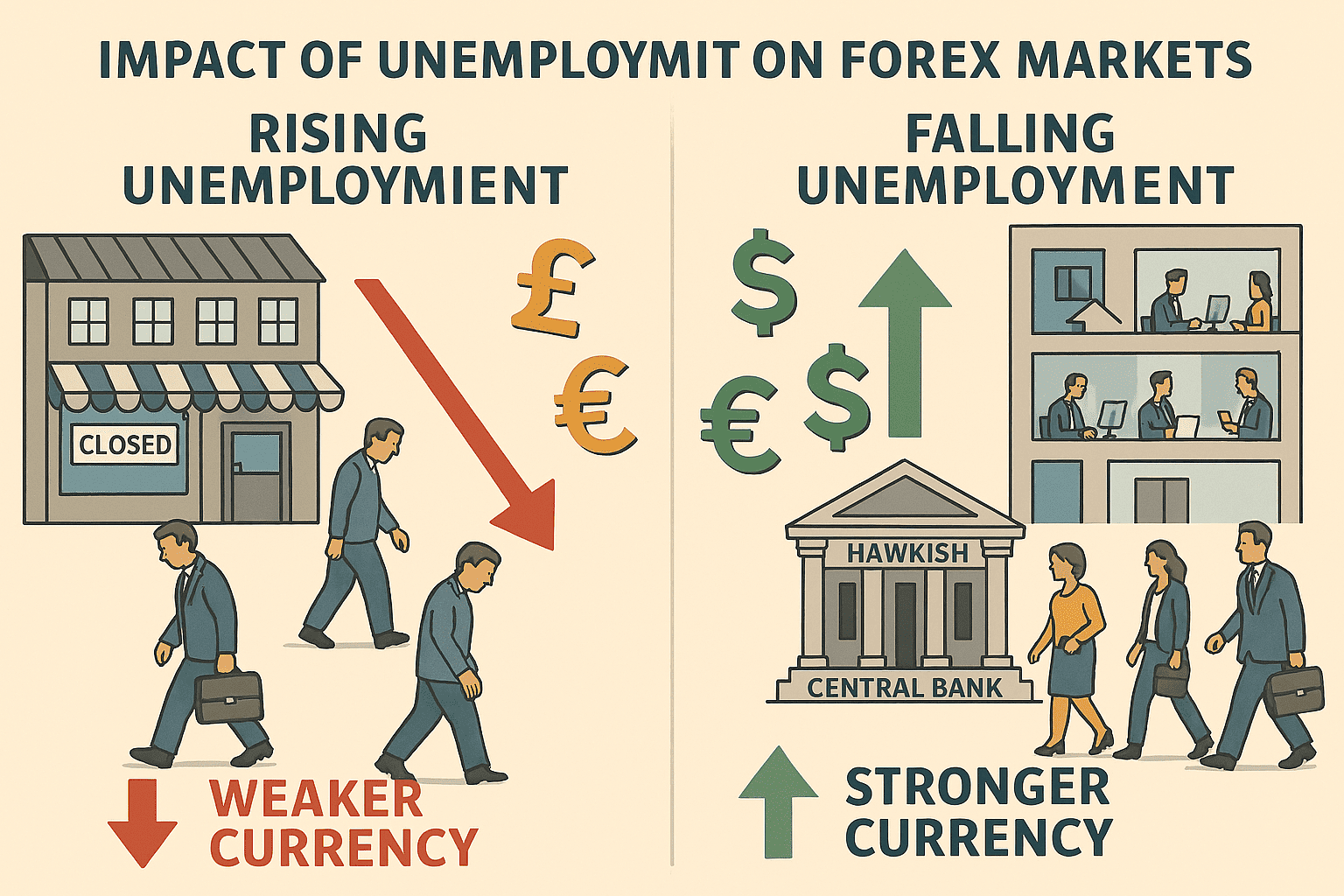
At the core, a rising unemployment rate signals economic weakness:
- Less income → reduced spending → slower GDP growth.
- Central banks may become more dovish, cutting rates or pausing hikes to avoid deeper slowdowns.
- Confidence drops, businesses hold back on investment and currency value weakens.
On the flip side, falling unemployment rates reflect resilience and expansion:
- More employed people = more spending = growth.
- Central banks may lean hawkish, especially if tight labor conditions push wages (and inflation) higher.
- Result: Currencies tend to strengthen.
📌 Bottom line: Unemployment influences both monetary policy outlook and market sentiment two critical FX drivers.
2. Currencies Most Sensitive to Employment Trends
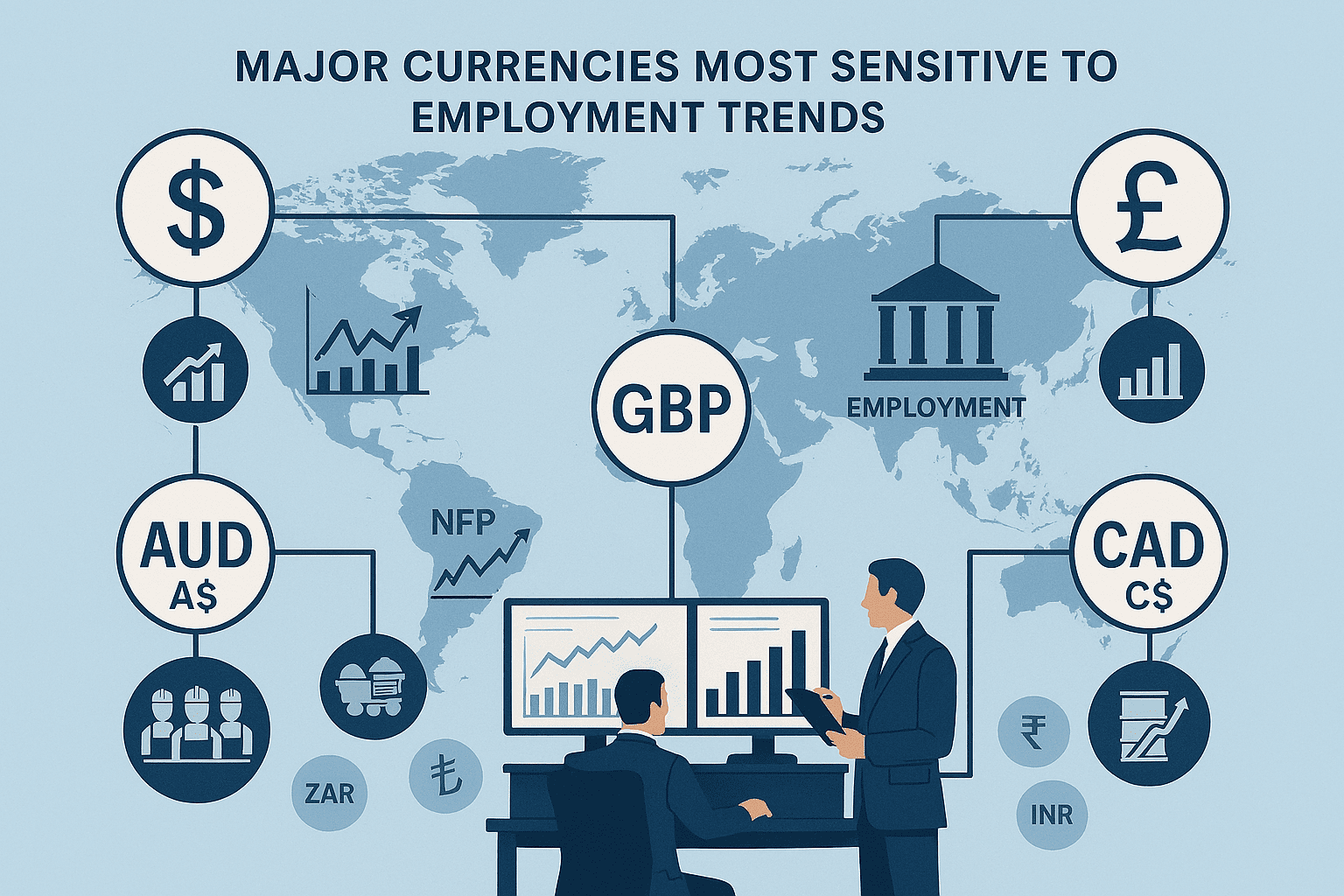
🇺🇸 USD – U.S. Dollar
The U.S. Non-Farm Payrolls report (NFP) is the most watched labor release globally. A surprise in jobs added or unemployment rate often triggers sharp USD moves, especially when paired with wage data.
🇬🇧 GBP – British Pound
UK jobs data (including unemployment rate and average earnings) plays a huge role in shaping Bank of England policy. Strong labor data = hawkish BOE = GBP strength.
🇦🇺 AUD – Australian Dollar
Employment changes and jobless rate from Australia are key drivers of the AUD. The RBA often references labor tightness as a policy input.
🇨🇦 CAD – Canadian Dollar
Canada’s monthly jobs report can spark big CAD reactions especially when combined with oil market movements.
🧠 Emerging market currencies (like ZAR, TRY, INR) may also react to unemployment shifts, though often with a lag due to lower data transparency or other overriding macro pressures.
3. Global Trends to Watch in 2025
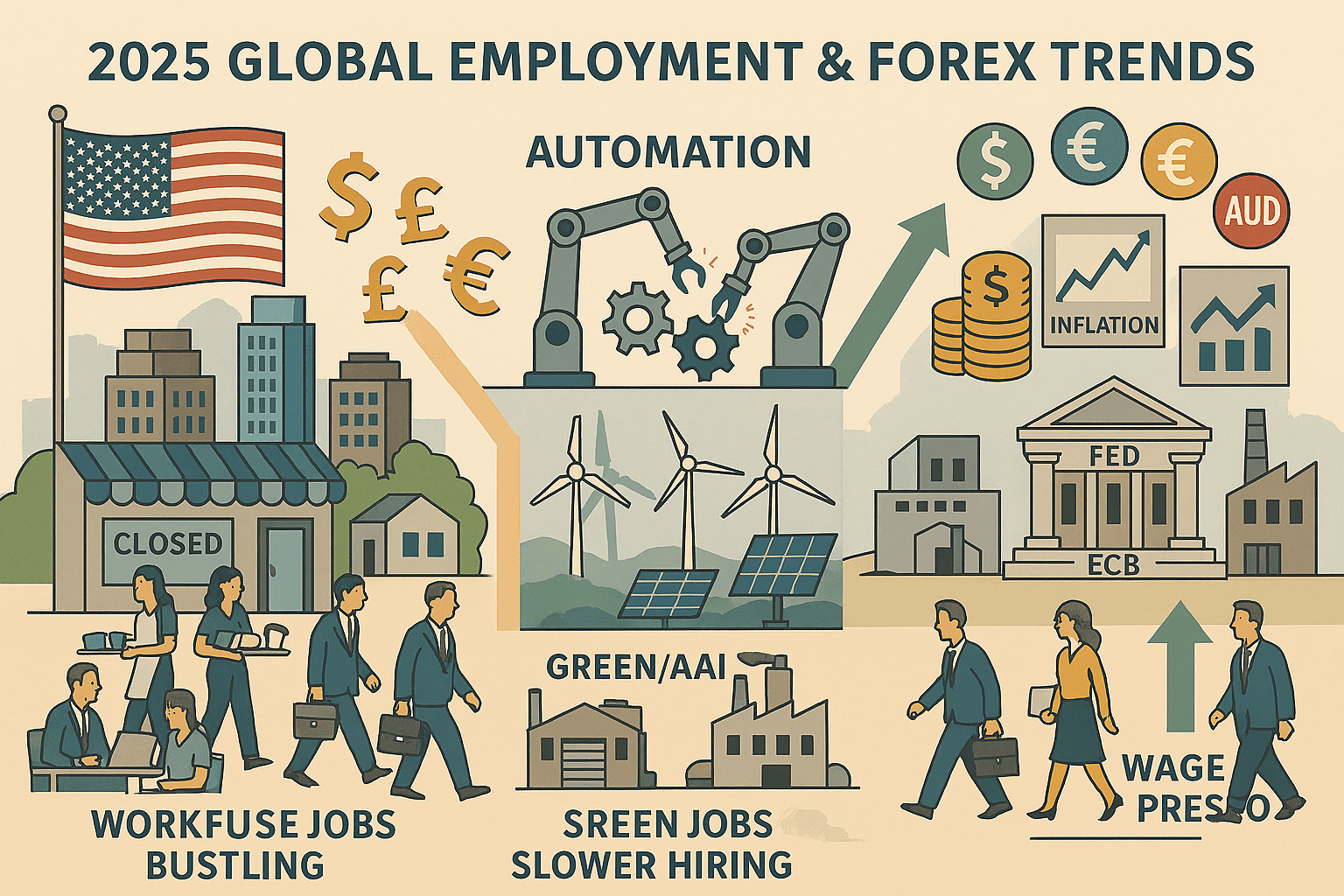
🔄 Uneven Recovery Post-COVID
While some economies (like the U.S.) have normalized employment, others particularly in Europe and Asia are still grappling with lagging job creation in key sectors.
🤖 Tech Displacement vs. Green Economy Growth
Automation is reshaping traditional employment sectors, while renewable energy and sustainability projects are creating new jobs. These transitions affect labor market confidence and FX sentiment differently across regions.
👷 Wage Pressure and Central Bank Reaction
Tight labor markets often lead to rising wages, which in turn fuel inflation. Central banks respond by tightening, strengthening local currencies unless the wage growth risks tipping into stagflation territory.
4. How Unemployment Impacts Central Bank Policy (and Currencies)
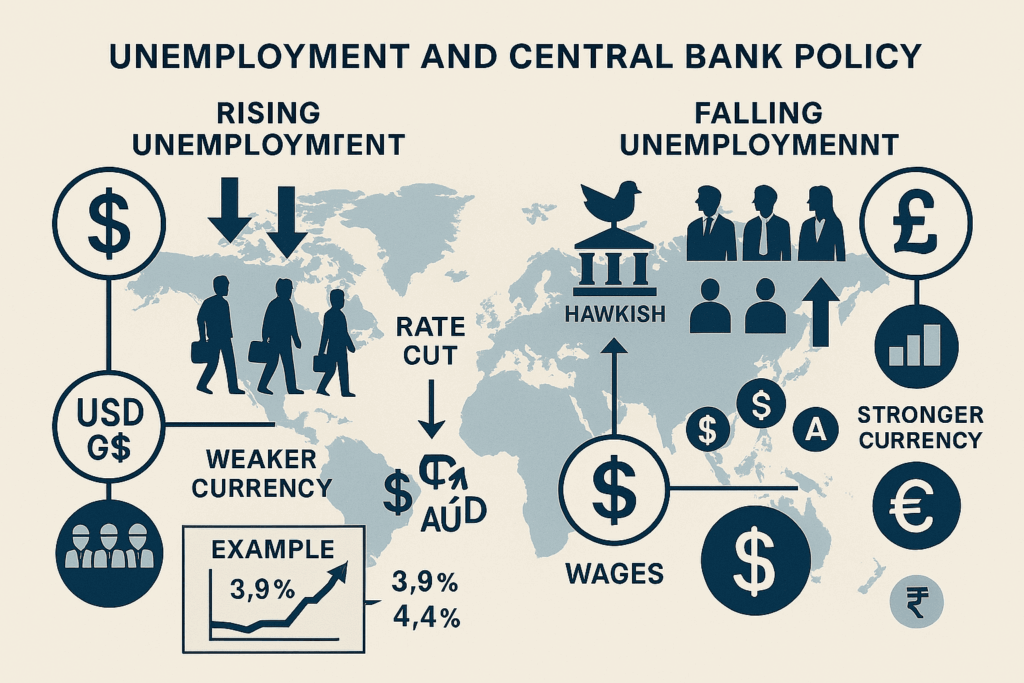
- Rising unemployment + weak inflation → Rate cuts or dovish pause → FX weakness
- Falling unemployment + rising wages → Rate hikes likely → FX strength
- Stubborn joblessness in key sectors → Signals structural economic weakness → long-term bearish currency outlook
📈 Example: If U.S. unemployment unexpectedly jumps from 3.9% to 4.4%, the market may instantly price out Fed hikes, triggering a USD selloff even before the Fed speaks.
5. Trading Strategies Around Unemployment Data

✅ 1. Trade the Surprise, Not the Forecast
Markets move on deviation from expectations, not the number itself. Watch consensus forecasts, and be ready for volatility if actual data breaks out from that range.
✅ 2. Combine Jobs and Wages
An improving job count with rising wages is bullish. But if jobs rise and wages drop, the reaction may be mixed or even negative for the currency.
✅ 3. Look for Cross-Pair Opportunities
If UK jobs come in strong while U.S. NFP misses, GBP/USD can offer a cleaner long setup than trading GBP or USD alone.
✅ 4. Beware of Revisions
Labor data is often revised in future months. Large revisions to prior releases can trigger bigger moves than the current headline figure.
6. Real Market Example: USD and Unemployment in Action
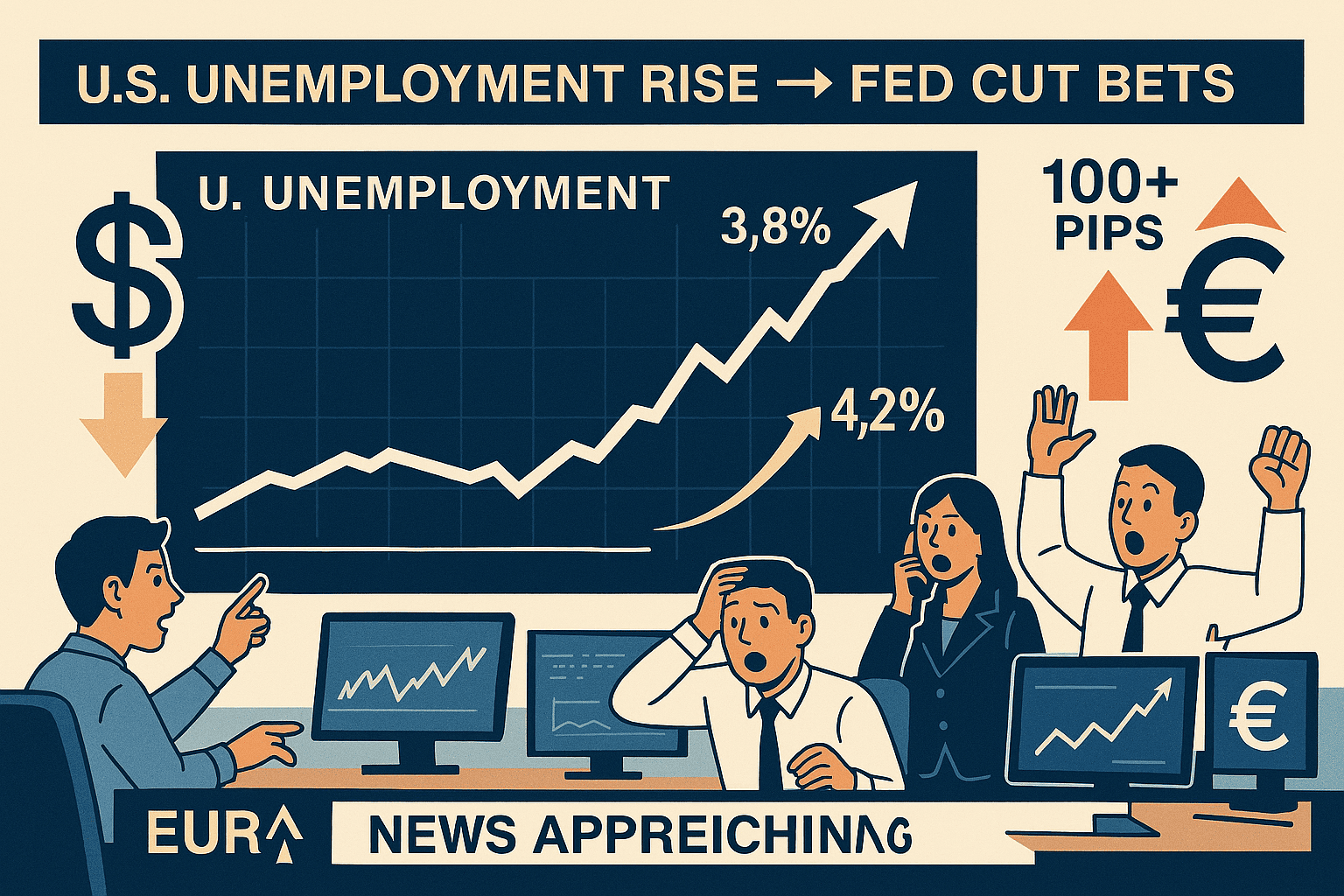
In August 2024, the U.S. unemployment rate ticked up to 4.2% from 3.8%, even as job creation stayed positive. The market viewed it as a sign of softening labor conditions, and EUR/USD rallied 100+ pips as traders priced in Fed rate cuts earlier than expected.
🎯 Lesson: It’s not just jobs gained it’s the overall trend in labor strength that matters for currencies.
Final Thoughts
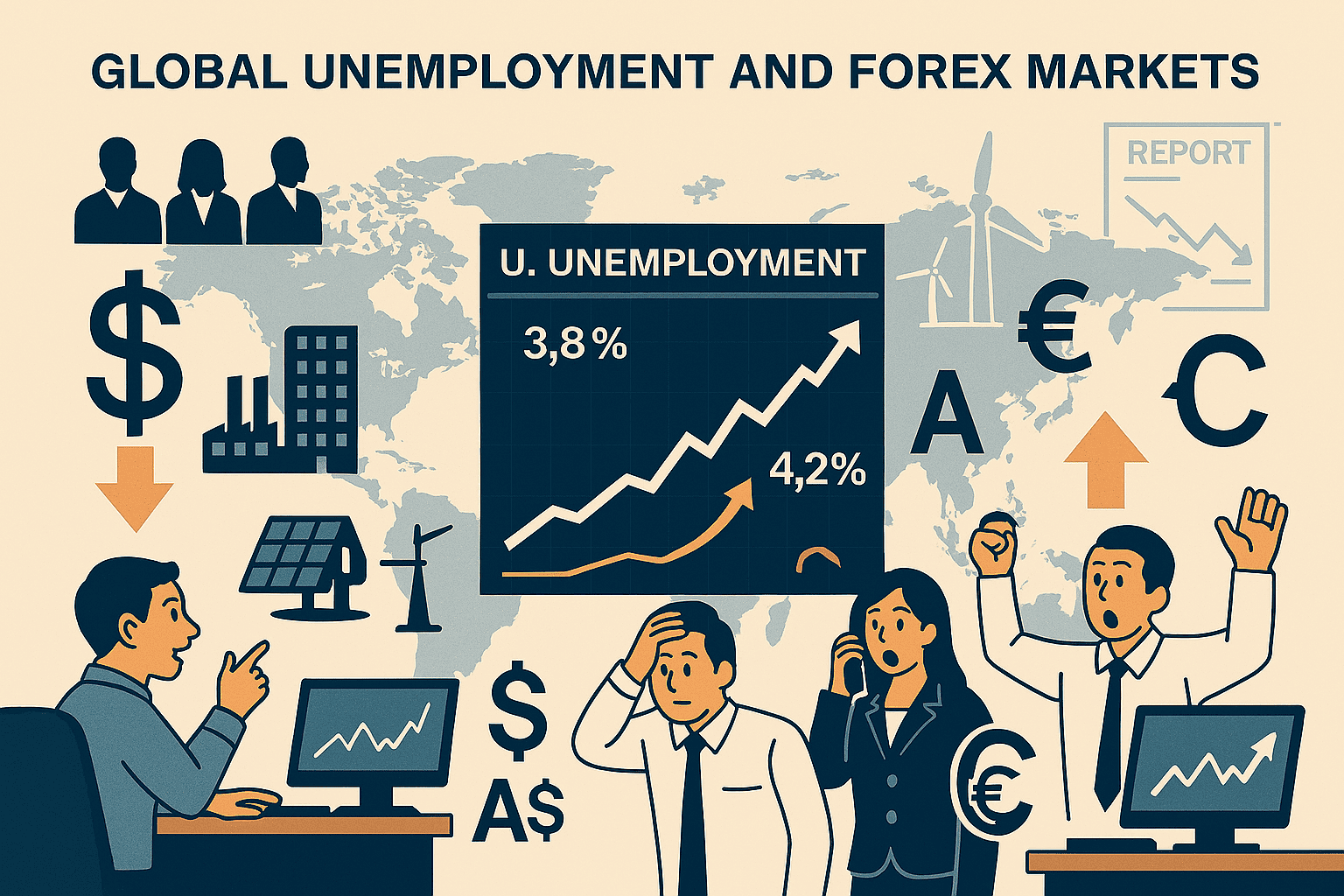
Unemployment data may not grab as many headlines as CPI or interest rates, but it’s a foundational driver of forex movements. From shaping central bank decisions to influencing long-term economic trends, global employment numbers carry serious weight in the FX market.
📌 Pro Tip: Don’t just trade the number trade the reaction relative to expectations and in sync with broader macro narratives.
As 2025 unfolds, expect global job trends to remain front and center especially in economies facing political shifts, technological disruption, or sluggish recovery. The smarter you read the labor landscape, the sharper your edge in the forex market.