Introduction
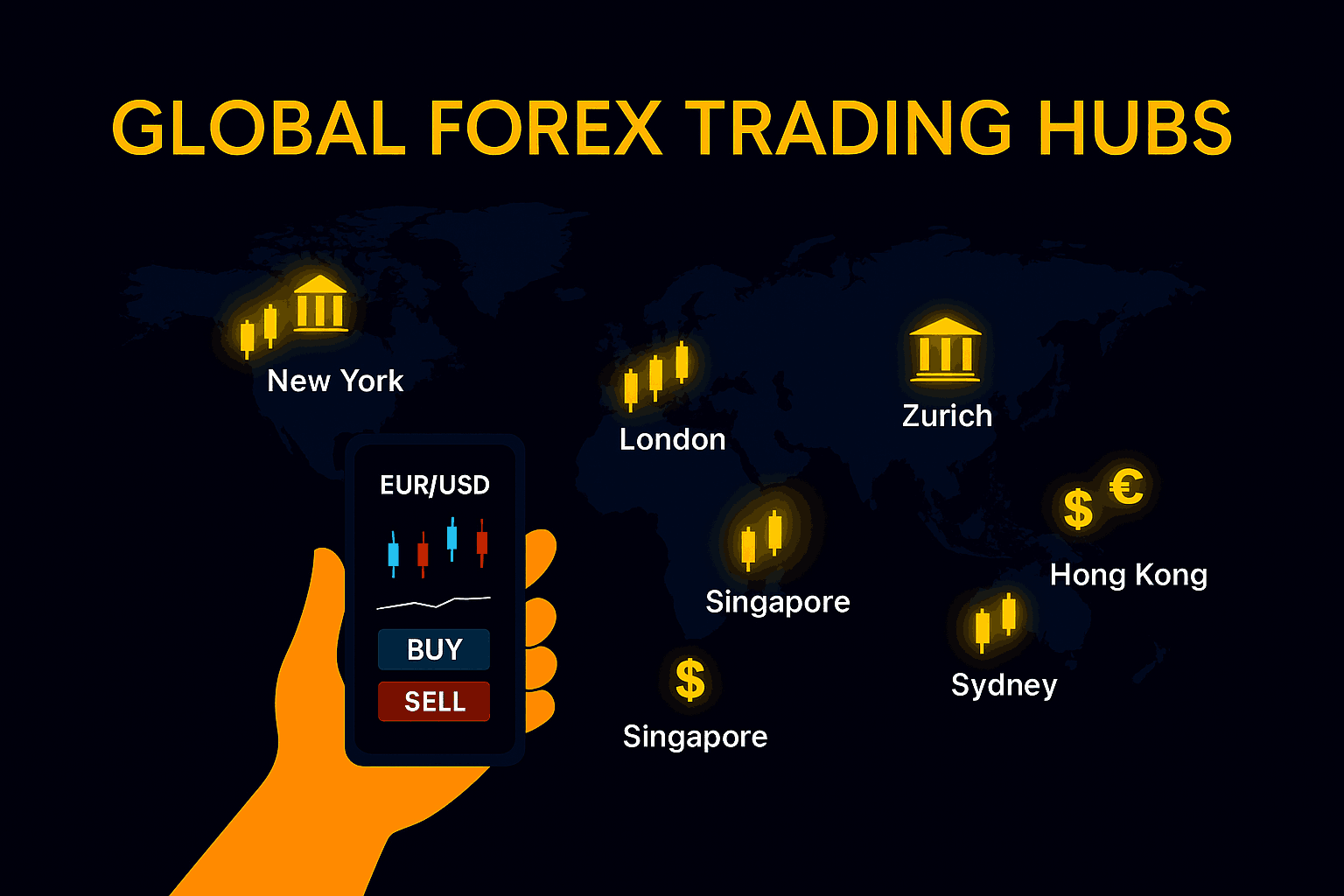
Forex trading is the most liquid and decentralized financial market on Earth, but that doesn’t mean activity is spread evenly across the globe. In fact, the top forex trading hubs across the globe dominate the space, acting as financial nerve centers where trillions of dollars change hands daily.
These forex trading hubs serve as strategic command points for institutional investors, banks, hedge funds, and retail traders alike. They provide the infrastructure, regulation, and talent that power the global currency market.
Let’s take a tour of the top forex trading hubs around the world and see what makes each one a vital part of the global FX ecosystem.
1. London, United Kingdom 🇬🇧
🔹 Status: World’s #1 forex hub
🔹 Share of Global FX Volume: ~38% (as per BIS data)
🔹 Trading Session: London (08:00–16:00 GMT)
London remains the epicenter of global forex trading. With its ideal time zone overlap (bridging Asian and U.S. sessions), highly developed financial services industry, and deep liquidity, it dominates spot FX, forwards, and swaps.
Key Features:
- Home to the Bank of England
- Strong regulatory framework via FCA
- Host to major banks: HSBC, Barclays, Standard Chartered
- Popular with hedge funds and institutional traders
🧠 Fun fact: Many forex pricing feeds take their “official” daily fix from the 4 PM London fix rate.
2. New York, USA 🇺🇸
🔹 Status: Second-largest FX hub
🔹 Share of Global FX Volume: ~17%
🔹 Trading Session: New York (13:00–22:00 GMT)
New York is the heart of North American trading and anchors the U.S. dollar the world’s most traded currency. It also plays a pivotal role in volatility spikes during major economic news like NFP, CPI, and Fed decisions.
Key Features:
- Home to Wall Street, top-tier banks (Goldman Sachs, JPMorgan)
- Overlaps with London for peak volume hours
- Regulated by SEC, CFTC, and FINRA
💵 Tip: Most major forex moves happen during the London–New York overlap window (13:00–17:00 GMT).
3. Tokyo, Japan 🇯🇵
🔹 Status: Asia’s forex anchor
🔹 Share of Global FX Volume: ~5–6%
🔹 Trading Session: Tokyo (00:00–09:00 GMT)
Tokyo opens the global trading day and plays a key role in JPY and cross-Asian pairs like AUD/JPY, NZD/JPY, and EUR/JPY. Large Japanese corporations and banks conduct major hedging and trade flows in this session.
Key Features:
- Overseen by the Bank of Japan (BOJ)
- Significant influence on safe haven flows
- Strong interbank liquidity, especially in yen pairs
🗾 Note: Tokyo sessions can be calmer, but news out of China or BOJ surprises can cause large spikes.
4. Singapore 🇸🇬
🔹 Status: Rising Asian FX powerhouse
🔹 Share of Global FX Volume: ~9%
🔹 Trading Session: Overlaps Tokyo, Sydney, and part of London
Singapore is now Asia’s second-largest trading hub, surpassing Hong Kong in recent years due to political stability, global banking presence, and pro-business regulation.
Key Features:
- Tight regulation via Monetary Authority of Singapore (MAS)
- Regional HQ for many global FX brokers and banks
- Strong infrastructure for institutional and high-frequency trading
🌏 Singapore is becoming the go-to spot for FX desks covering both APAC and global macro trades.
5. Hong Kong 🇭🇰
🔹 Status: Gateway to Chinese markets
🔹 Share of Global FX Volume: ~7–8%
🔹 Trading Session: Late Asian/early London
Despite recent political shifts, Hong Kong remains a vital forex hub especially for flows involving CNH (offshore yuan) and corporate hedging across Asia.
Key Features:
- Proximity to mainland China and SE Asia
- Major trading center for USD/CNH, HKD pairs
- Advanced infrastructure and fintech innovation
📉 Market watchers closely follow Hong Kong’s liquidity patterns for clues on broader Asian sentiment.
6. Zurich, Switzerland 🇨🇭
🔹 Status: European safe-haven center
🔹 Trading Session: Overlaps London
Zurich may not match London in volume, but it plays an outsized role in safe-haven flows, especially in CHF pairs. The Swiss National Bank (SNB) is known for surprise FX interventions that impact global markets.
Key Features:
- High banking secrecy (though evolving)
- FX desks often handle wealth management and large-scale hedging
- Quiet but important in European risk-off scenarios
7. Sydney, Australia 🇦🇺
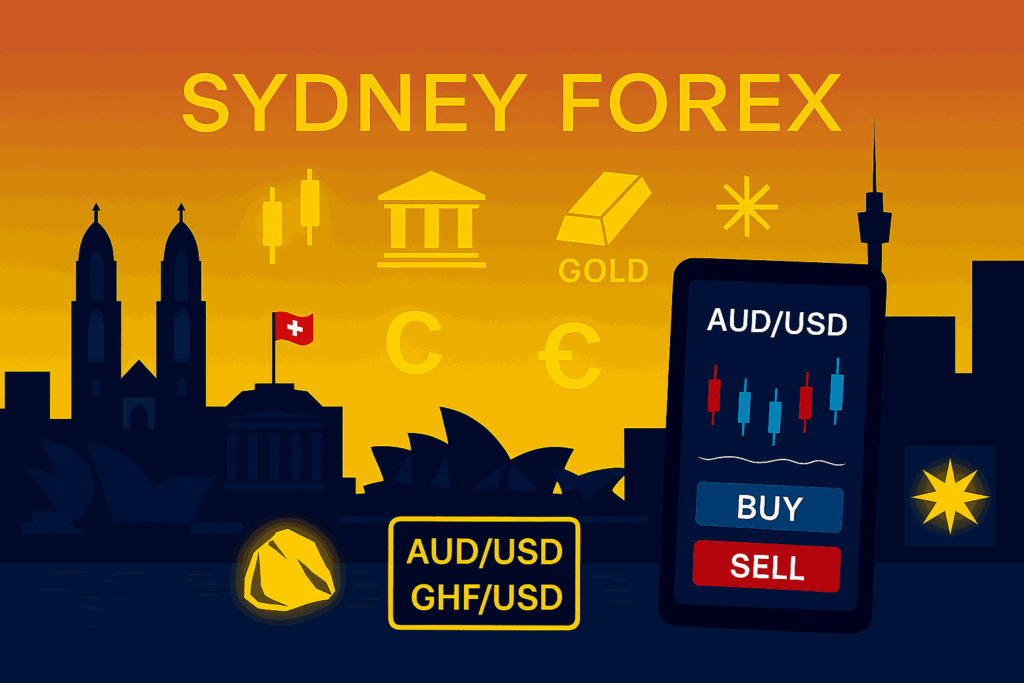
🔹 Status: FX market opener
🔹 Trading Session: Sydney (21:00–06:00 GMT)
Sydney’s session is generally low in volatility but crucial for Asia-Pacific flow positioning, especially in AUD and NZD pairs. Major banks and commodity traders are active here.
Key Features:
- Home to RBA (Reserve Bank of Australia)
- Key for AUD/USD and cross-commodity currencies
- Liquidity tends to build into Tokyo open
Final Thoughts
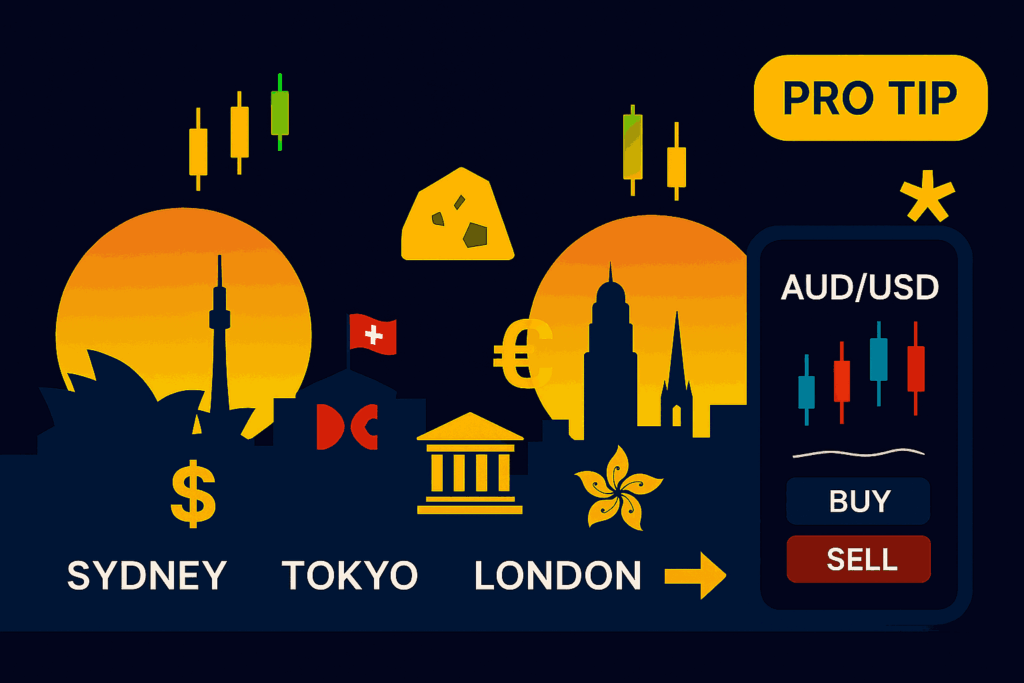
Understanding where forex activity concentrates helps you:
- Time your trades more effectively
- Predict volatility spikes
- Follow key currency flows as they move from one hub to another
🌐 Pro Tip: Align your strategy with session overlaps London/New York for volatility, Asia open for quiet setups, and Asia/Europe handoff for early momentum.
As the global economy evolves, so do these trading hubs. But for now, London, New York, Tokyo, and Singapore remain the pillars of the global forex ecosystem.