
Introduction
The Bank of Japan (BOJ) has long stood apart from its global peers with its ultra-loose monetary policy. Even as the Fed, ECB, and Bank of England raced to hike rates in response to inflation, the BOJ stuck to near-zero interest rates and aggressive bond buying.
The result? A historically weak Japanese Yen (JPY) that has tested multi-decade lows against currencies like the USD, EUR, and GBP.
But with shifting inflation dynamics and growing domestic pressure, is the BOJ preparing for a policy shift? Or will the yen remain under pressure well into 2025?
Let’s explore the outlook, market impact, and key trading opportunities around the BOJ’s next move.
1. Why the BOJ’s Policy Stance Matters

The BOJ is the last dovish major central bank. Its reluctance to raise interest rates or tighten policy has:
- Weakened the yen, making JPY one of the most shorted currencies
- Boosted carry trade popularity, where traders borrow in yen to invest in higher-yielding currencies
- Put Japan at odds with the global tightening cycle
📉 The BOJ’s ultra-loose stance made USD/JPY, EUR/JPY, and GBP/JPY some of the most explosive pairs in the past 2 years.
2. Will the BOJ Shift in 2025?

There are increasing signals that change may be coming, but it remains gradual:
🔼 Inflation Pressures
- While Japan traditionally battled deflation, core inflation has remained above 2% for over a year.
- Rising wages and food costs are making inflation stickier than the BOJ expected.
💬 Verbal Intervention
- Japanese officials frequently express concern about excessive yen weakness, warning against “disorderly moves.”
- While this isn’t hard policy, it does create short-term reversals in JPY pairs.
🛠️ Yield Curve Control (YCC) Tweaks
- The BOJ has adjusted its YCC policy, widening the allowable band for 10-year government bond yields.
- This is seen as a soft exit signal from extreme stimulus but not a full tightening.
🧠 Bottom line: The BOJ is tiptoeing toward normalization, but not fast enough to significantly boost the yen yet.
3. What Keeps the Yen Weak?
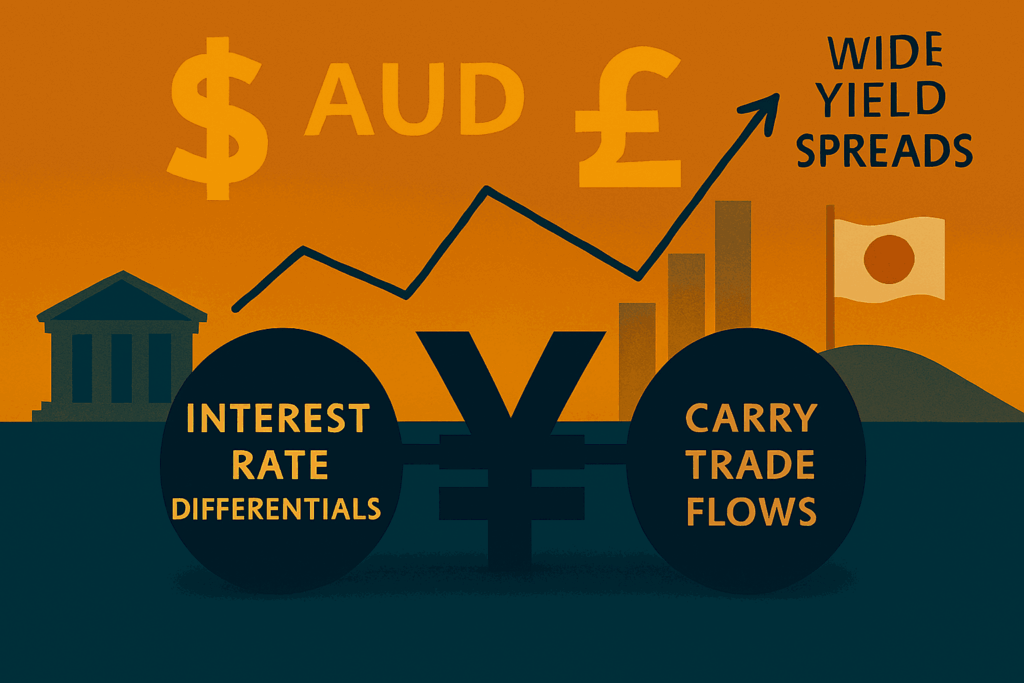
Even if inflation ticks higher, several factors continue to suppress the yen:
- Interest Rate Differentials: Other central banks are still offering much higher rates.
- Carry Trade Flows: Borrowing in JPY to fund positions in AUD, USD, or GBP remains profitable.
- Cautious BOJ Messaging: Any hawkish hints are usually balanced with reassurances that tightening will be slow.
🔍 Example: As long as the Fed maintains rates above 5% and the BOJ stays near 0%, USD/JPY will remain biased to the upside.
4. How Major Yen Pairs Are Affected
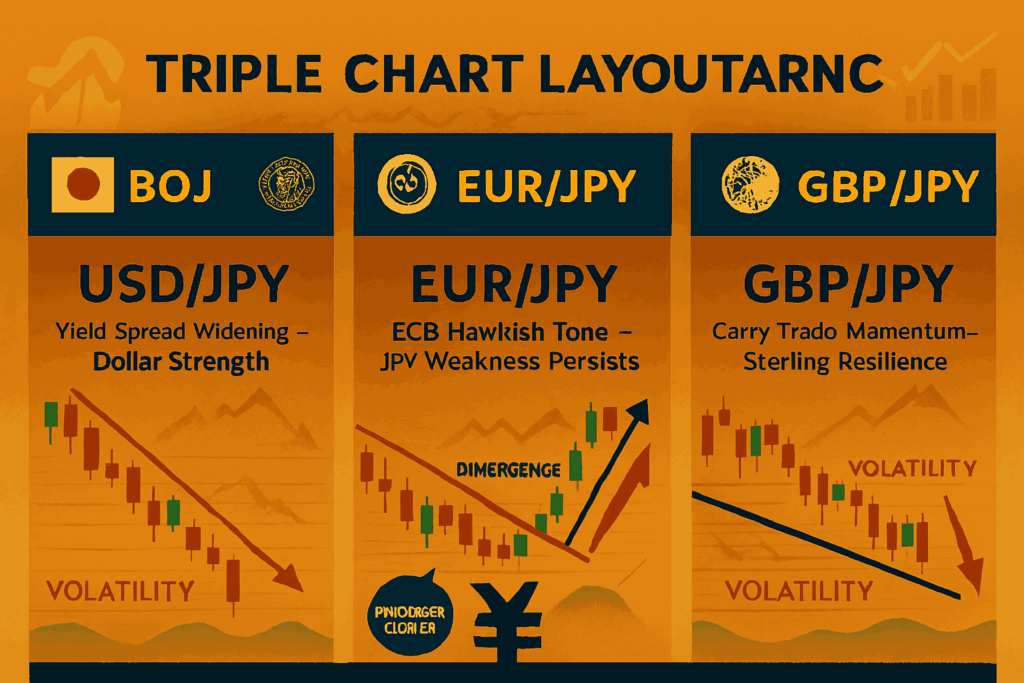
🇺🇸 USD/JPY
- The most rate-sensitive pair.
- Fed hawkishness + BOJ dovishness = strong uptrend
- BOJ tightening surprises or U.S. rate cuts = downside potential
🇪🇺 EUR/JPY
- Strong eurozone inflation + ECB tightening = upside
- If ECB pauses while BOJ stays loose, range-bound or reversal setups emerge
🇬🇧 GBP/JPY
- Volatile due to both BOJ and BoE uncertainty
- Favors trending conditions during strong monetary divergence
💡 JPY crosses tend to explode during risk-on or risk-off sentiment due to Japan’s safe-haven status.
5. Trading Strategies for a Weak Yen Environment
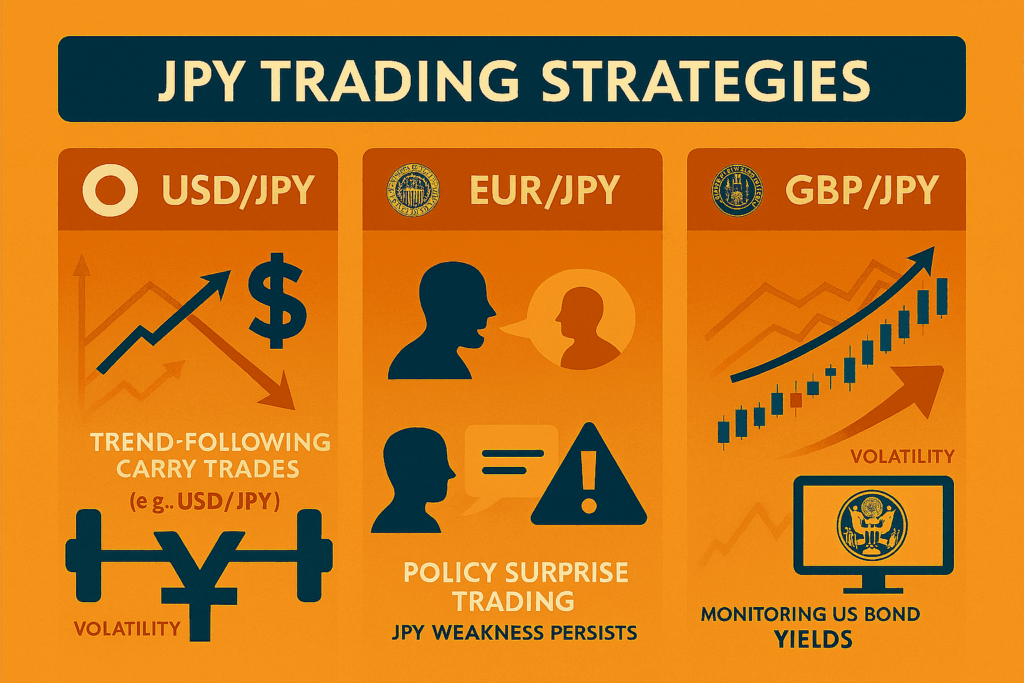
✅ 1. Follow the Trend on Carry Trades
Long AUD/JPY, USD/JPY, or GBP/JPY when fundamentals align (e.g., dovish BOJ, hawkish counterpart central bank). Use trailing stops to lock in extended gains.
✅ 2. Watch for Verbal Interventions
Sharp intraday JPY strength often follows statements from BOJ or MOF officials. Look to fade these moves once the dust settles unless followed by policy action.
✅ 3. Play the Policy Surprise
If the BOJ shocks the market with a surprise rate hike or ends YCC, expect sharp JPY rallies especially against overbought currencies.
✅ 4. Monitor U.S. Bond Yields
Higher U.S. yields = stronger USD/JPY. Keep an eye on Treasury movements during key events like CPI, NFP, or Fed statements.
6. Real Market Example: JPY Response to Policy Tweaks
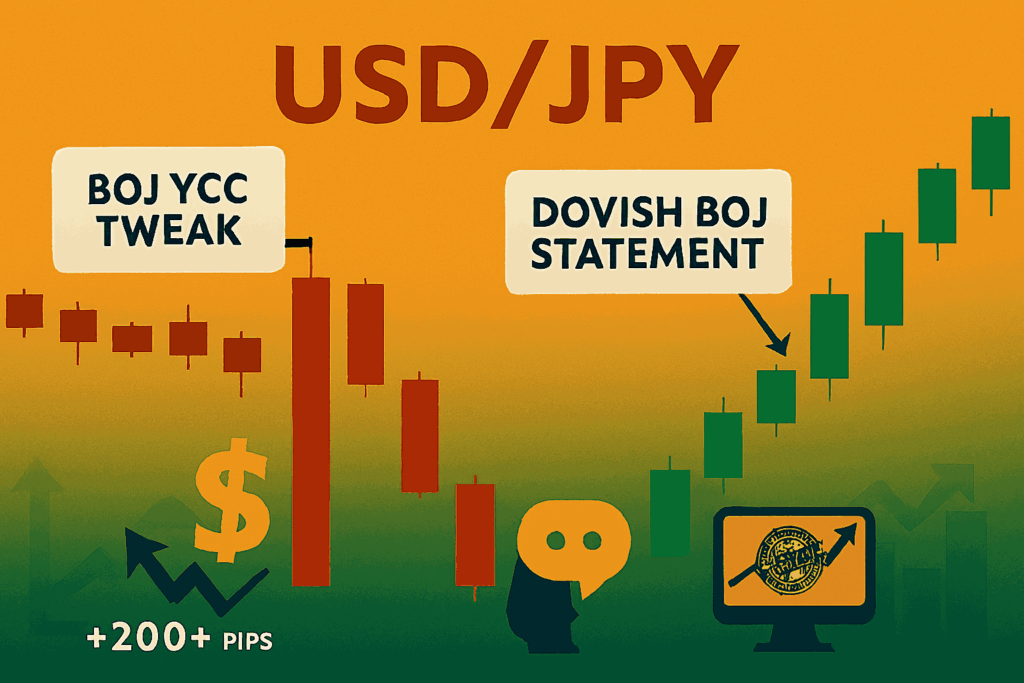
In July 2024, the BOJ adjusted its YCC policy by allowing 10-year yields to rise more freely. Markets interpreted this as a baby step toward normalization.
- USD/JPY dropped 200+ pips in 2 days
- EUR/JPY and GBP/JPY saw similar pullbacks
- However, the trend recovered within a week once the BOJ reiterated its dovish stance
🎯 Lesson: BOJ shifts spark temporary volatility but unless backed by firm policy action, the yen’s weakness often resumes.
Final Thoughts

The yen remains one of the most sensitive currencies to central bank divergence. And while the BOJ has started laying the groundwork for future tightening, its cautious approach continues to suppress JPY strength at least for now.
📌 Pro Tip: Don’t just watch what the BOJ says watch how markets interpret it relative to global rate expectations.
As 2025 unfolds, the biggest yen opportunities may come not from what the BOJ does, but from when the market thinks it will finally act.