Introduction
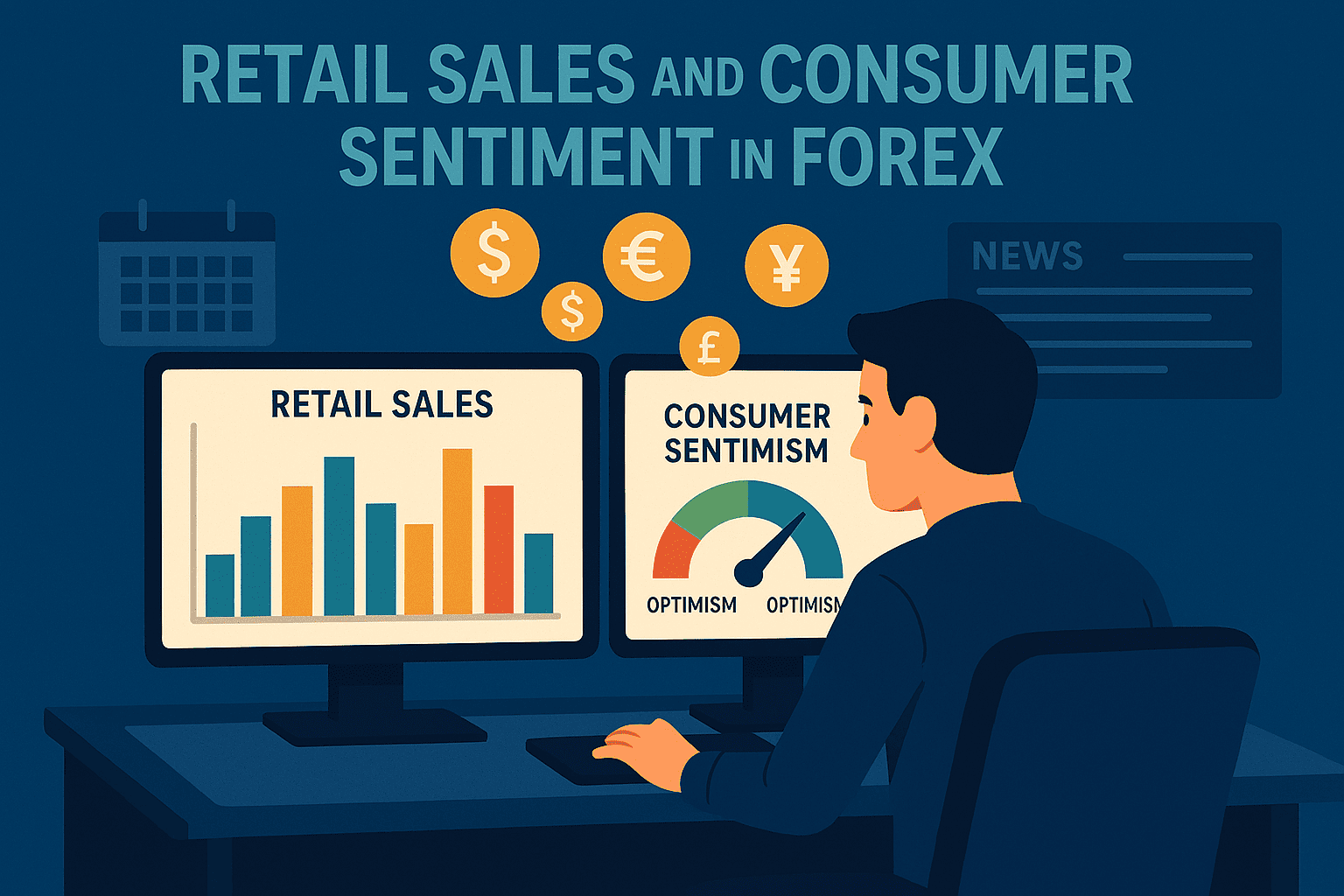
When traders think of major forex movers, they usually focus on interest rate decisions, inflation, or jobs data. But there’s another key player in the macro mix: Retail Sales and Consumer Sentiment. These two indicators offer a pulse on consumer behaviour the engine that drives most modern economies.
So, are they powerful enough to move currencies? The answer is yes but only if you know what to look for. In this article, we’ll explore how retail spending and sentiment data influence forex markets, and how you can trade them effectively in 2025.
1. Why Retail Sales Matter to Forex Markets
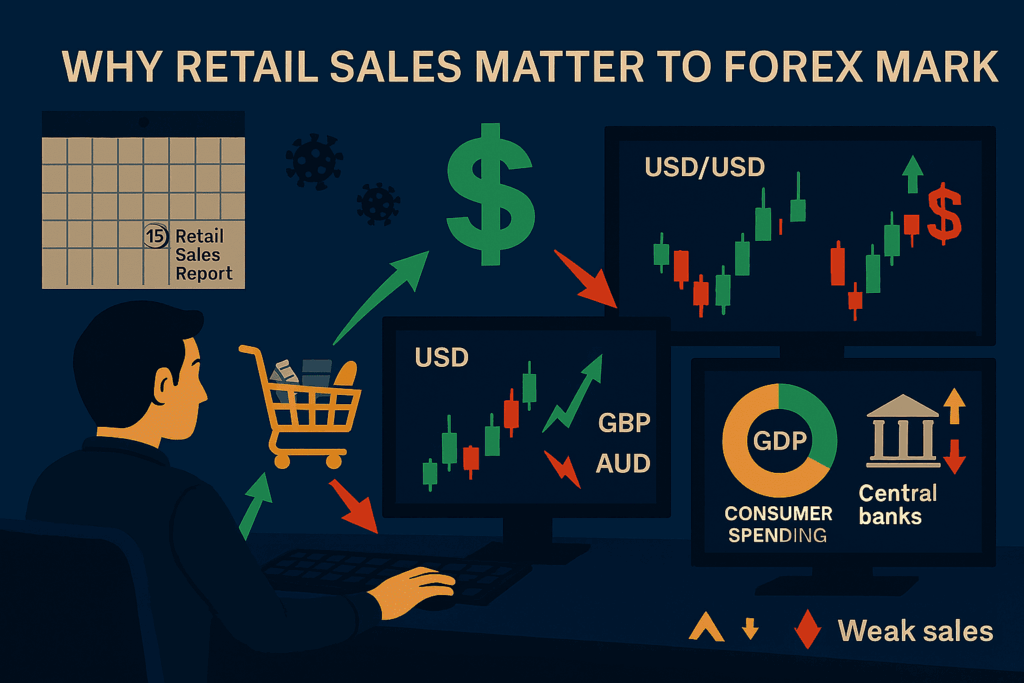
Retail sales track the total value of goods sold to consumers in a country over a given period. It’s one of the earliest signals of consumer demand, which influences business investment, hiring, and GDP growth.
💡 In economies like the U.S., where consumer spending makes up nearly 70% of GDP, retail sales are a big deal.
Here’s how it plays into currencies:
- Stronger-than-expected retail sales = economic strength = possible rate hikes = currency appreciation.
- Weaker sales = slowdown fears = possible easing or dovish tone = currency weakness.
This is especially true for USD, GBP, AUD, and other currencies with consumption-heavy economies.
2. Consumer Sentiment: The Psychological Angle
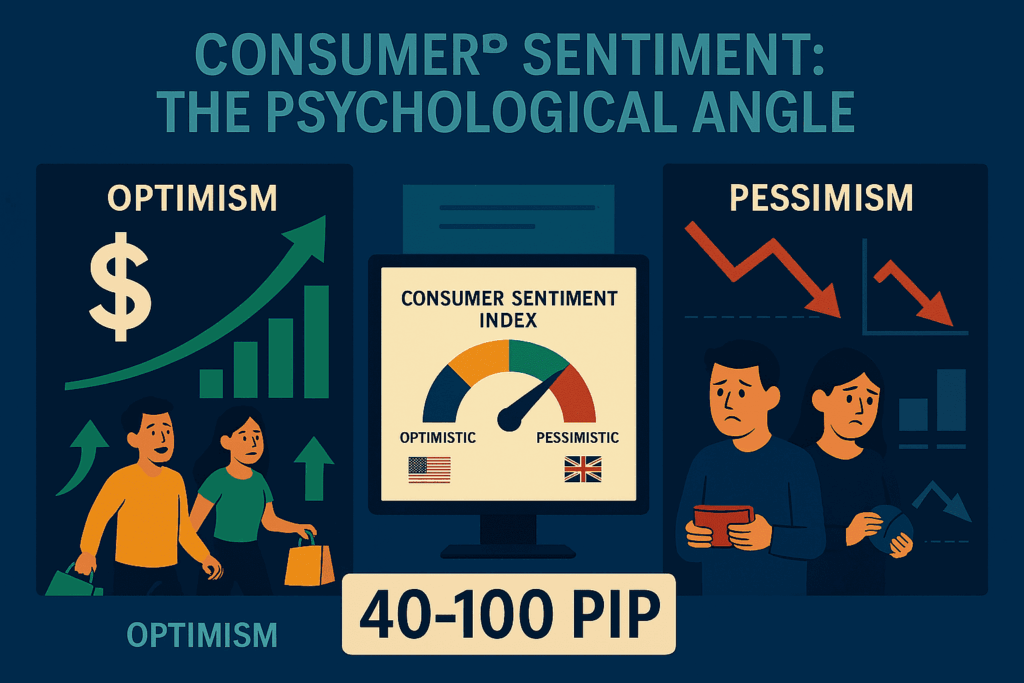
Consumer sentiment measures how optimistic or pessimistic people feel about their personal finances and the broader economy. Surveys like the University of Michigan Consumer Sentiment Index (U.S.) or GfK Consumer Confidence (UK/EU) are widely followed.
Why it matters:
- A confident consumer spends more → supports economic growth.
- A fearful consumer cuts back → slows demand, hurting GDP and inflation.
🧠 Sentiment often leads sales. If consumers are feeling uncertain, retail data may weaken in the next cycle.
3. Impact on Major Currencies
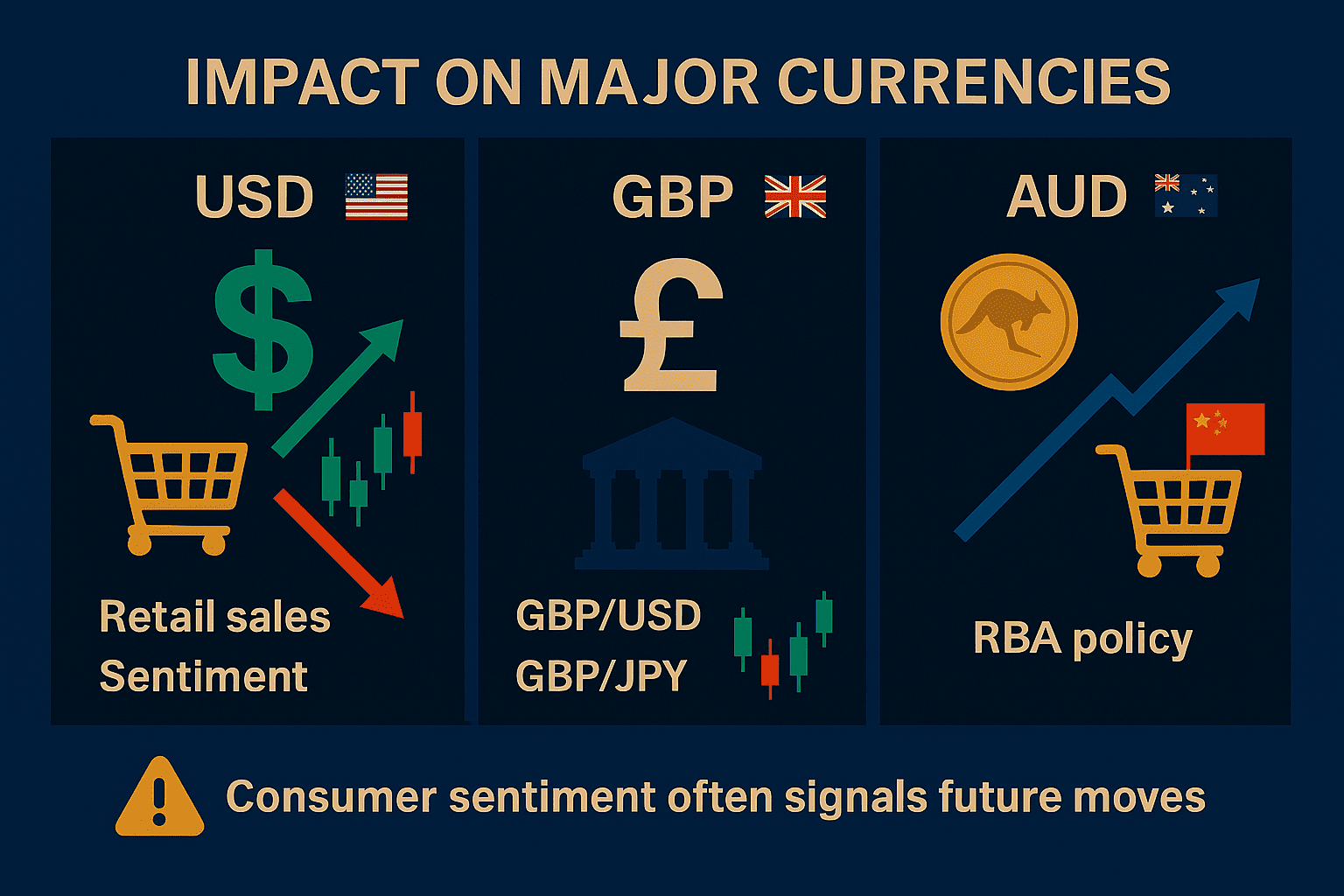
🇺🇸 USD (U.S. Dollar)
- Strong retail sales or upbeat consumer sentiment boosts USD, especially when inflation or employment data is mixed.
- Weak sentiment often signals economic fatigue or Fed pause → USD softens.
🇬🇧 GBP (British Pound)
- Retail spending is tightly linked to Bank of England expectations. A surprise in sales can directly move GBP pairs like GBP/USD or GBP/JPY.
🇦🇺 AUD (Australian Dollar)
- AUD reacts strongly to domestic retail sales especially when aligned with Chinese demand data, as both shape the RBA’s policy tone.
📉 Consumer sentiment tends to act as an early-warning signal. If confidence drops sharply, the market may front-run negative surprises in GDP or retail sales.
4. Volatility Around Retail/Sentiment Releases
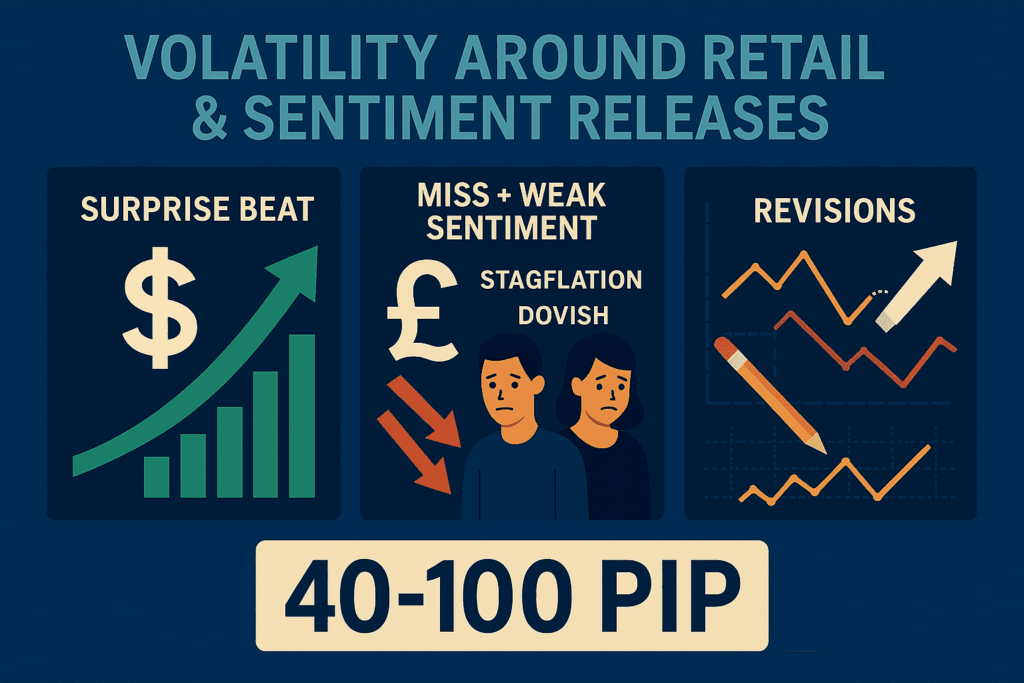
While not as explosive as NFP or CPI, these reports can still generate 40–100 pip moves in major pairs when they surprise:
- Surprise Beat: If retail sales rise 1.2% vs 0.5% expected, the market may immediately bid up the local currency.
- Miss + Weak Sentiment: Double whammy. Traders may dump the currency on fears of stagflation or dovish central bank pivot.
- Revisions: Watch out for prior month revisions markets do react if the back data is sharply changed.
5. Trading Strategy Ideas
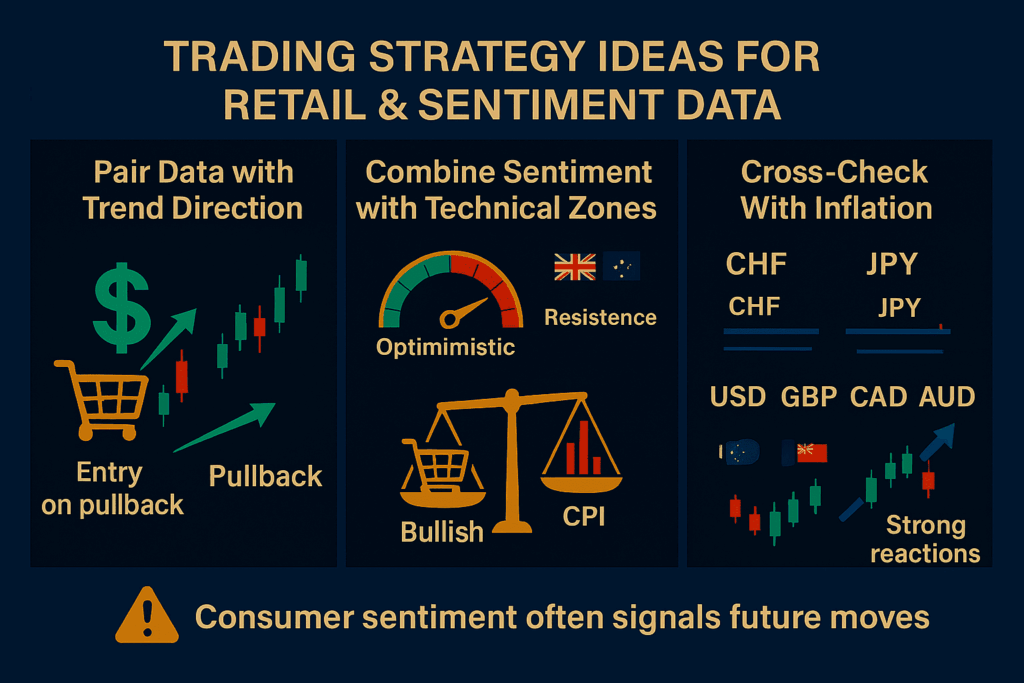
✅ 1. Pair Data with Trend Direction
If a currency is already trending bullish and retail data surprises to the upside, use that report as a trigger to join the trend on a pullback.
✅ 2. Combine Sentiment with Technical Zones
If sentiment data is weak and price is near key resistance, you have a potential reversal setup. Likewise, strong sentiment near support may act as a bounce trigger.
✅ 3. Cross-Check With Inflation
Rising retail sales + hot inflation = rate hike pressure → bullish.
Weak sales + cooling inflation = easing bias → bearish.
✅ 4. Avoid Choppy Pairs
Some currencies (like CHF or JPY) may not react much unless the retail data is extremely outside expectations. Focus on USD, GBP, CAD, AUD for cleaner responses.
6. Real-World Example: USD and Retail Shock
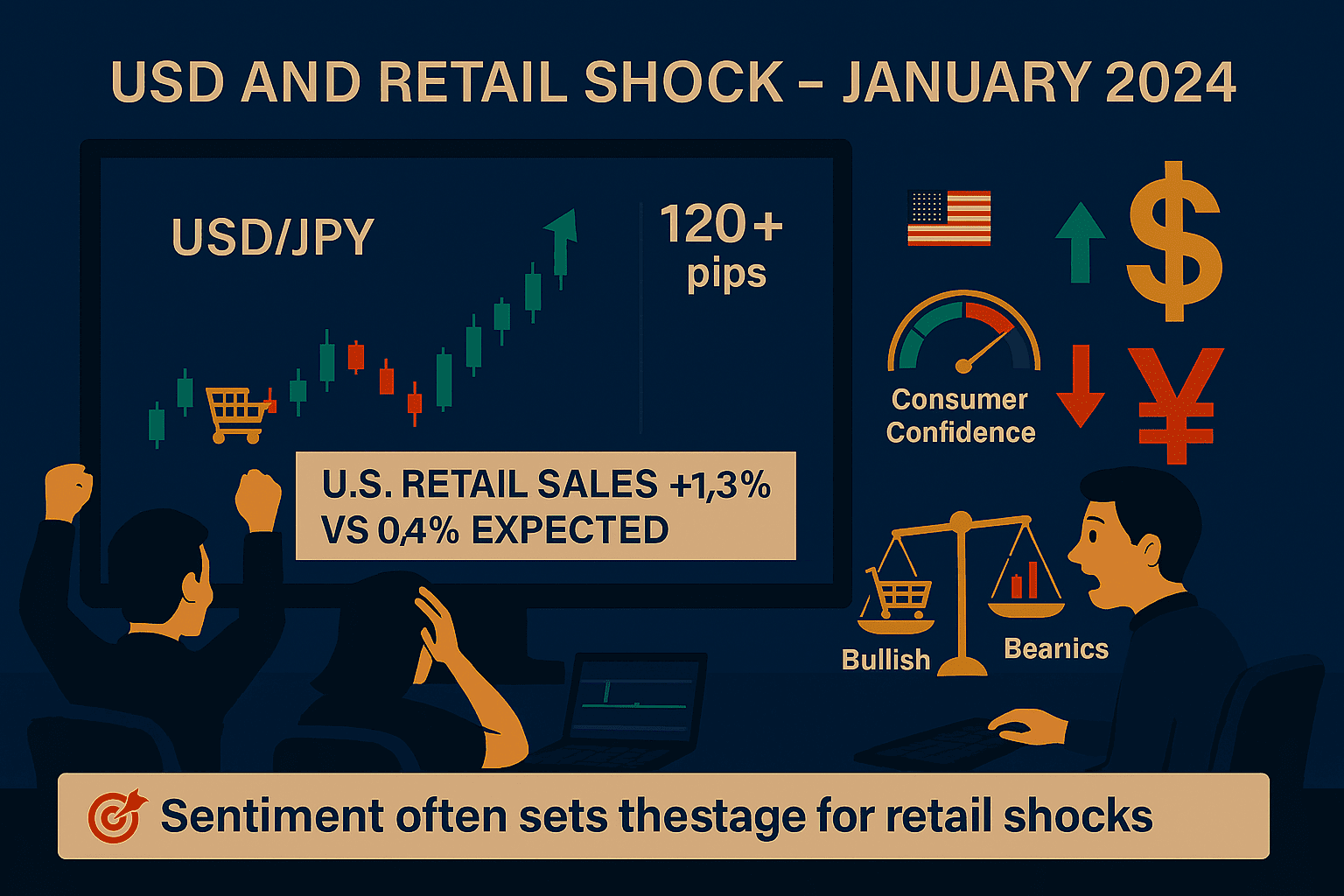
In January 2024, U.S. retail sales surprised the market with a 1.3% rise vs 0.4% expected. Traders rushed to price in a delayed Fed pivot, and USD/JPY jumped over 120 pips in a single day.
That move was amplified by upbeat consumer confidence data released earlier that week a classic case of sentiment setting the stage for a breakout in retail numbers.
🎯 Lesson: Don’t ignore sentiment surveys. They often point to where retail sales and the market are headed.
Final Thoughts
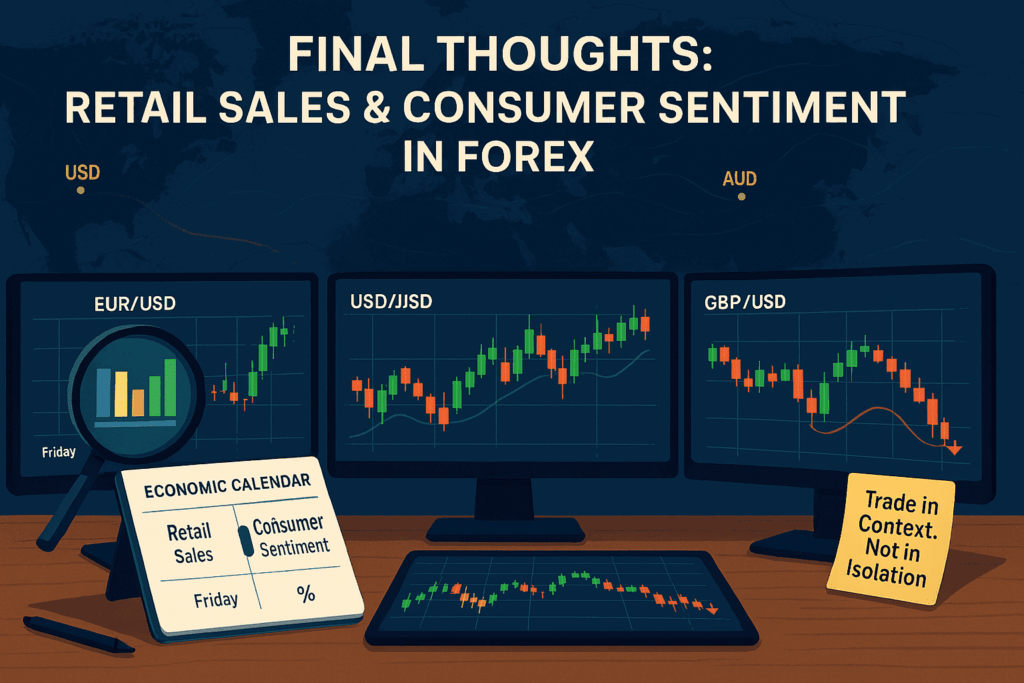
Retail sales and consumer sentiment may not grab headlines like CPI or NFP, but their impact on currency valuation is real especially when surprises hit or trends shift.
📌 Pro Tip: Add retail sales and consumer sentiment releases to your economic calendar, and always trade them in context. A strong reading during a weak macro backdrop can still move markets if it’s unexpected.
As we move deeper into 2025, with rate expectations and global demand constantly shifting, these indicators will remain crucial tools for any serious forex trader.