Introduction
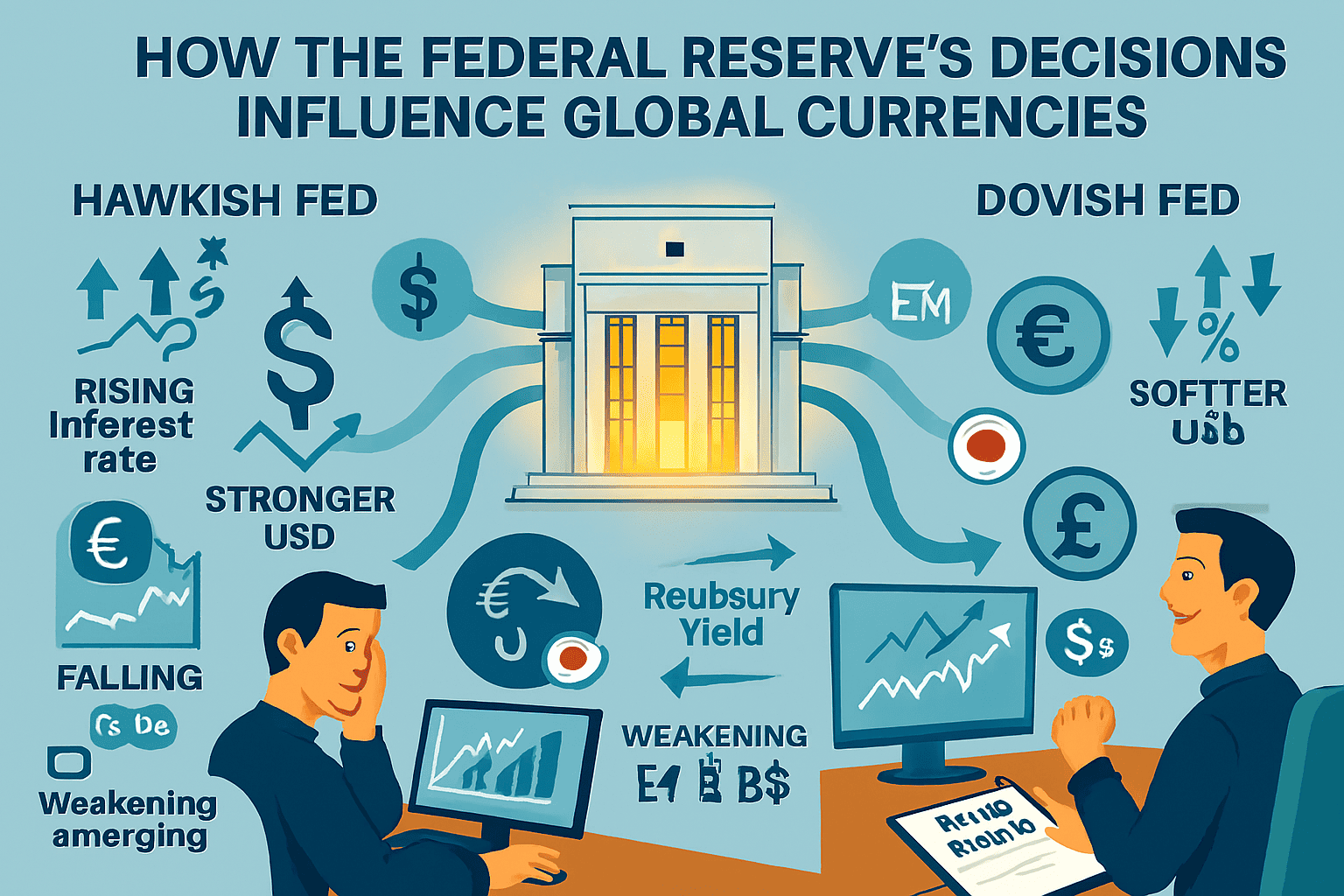
No institution wields more influence over the global forex market than the U.S. Federal Reserve. Its policy decisions especially on interest rates can reshape currency trends, move stock and bond markets, and ripple through every major economy in the world.
Whether you’re trading EUR/USD, USD/JPY, or even emerging market pairs like USD/ZAR or USD/INR, understanding the Fed’s moves is non-negotiable. In this article, we break down exactly how the Federal Reserve’s decisions impact global currencies, why traders obsess over FOMC meetings, and how you can turn Fed-driven volatility into profitable setups.
1. The Fed’s Mandate and Why It Matters to FX
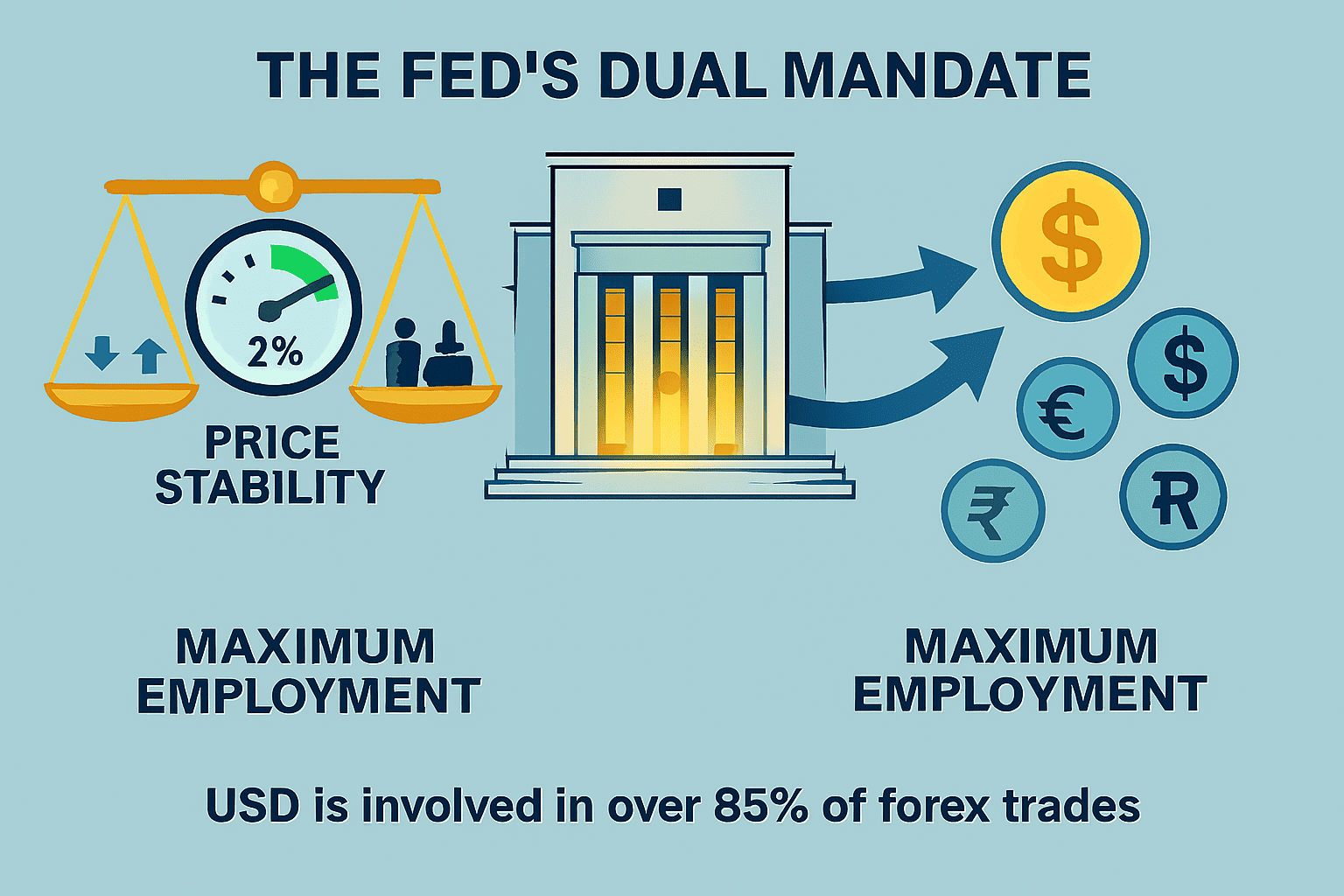
The Federal Reserve has a dual mandate:
- Keep inflation stable (around 2%)
- Support maximum sustainable employment
To meet these goals, the Fed adjusts interest rates and uses tools like quantitative easing (QE) or quantitative tightening (QT). These decisions directly impact the value of the U.S. Dollar (USD) and by extension, nearly every other currency. 💡 Since USD is involved in over 85% of all forex trades, what the Fed does rarely stays local.
2. Interest Rates: The Core Driver
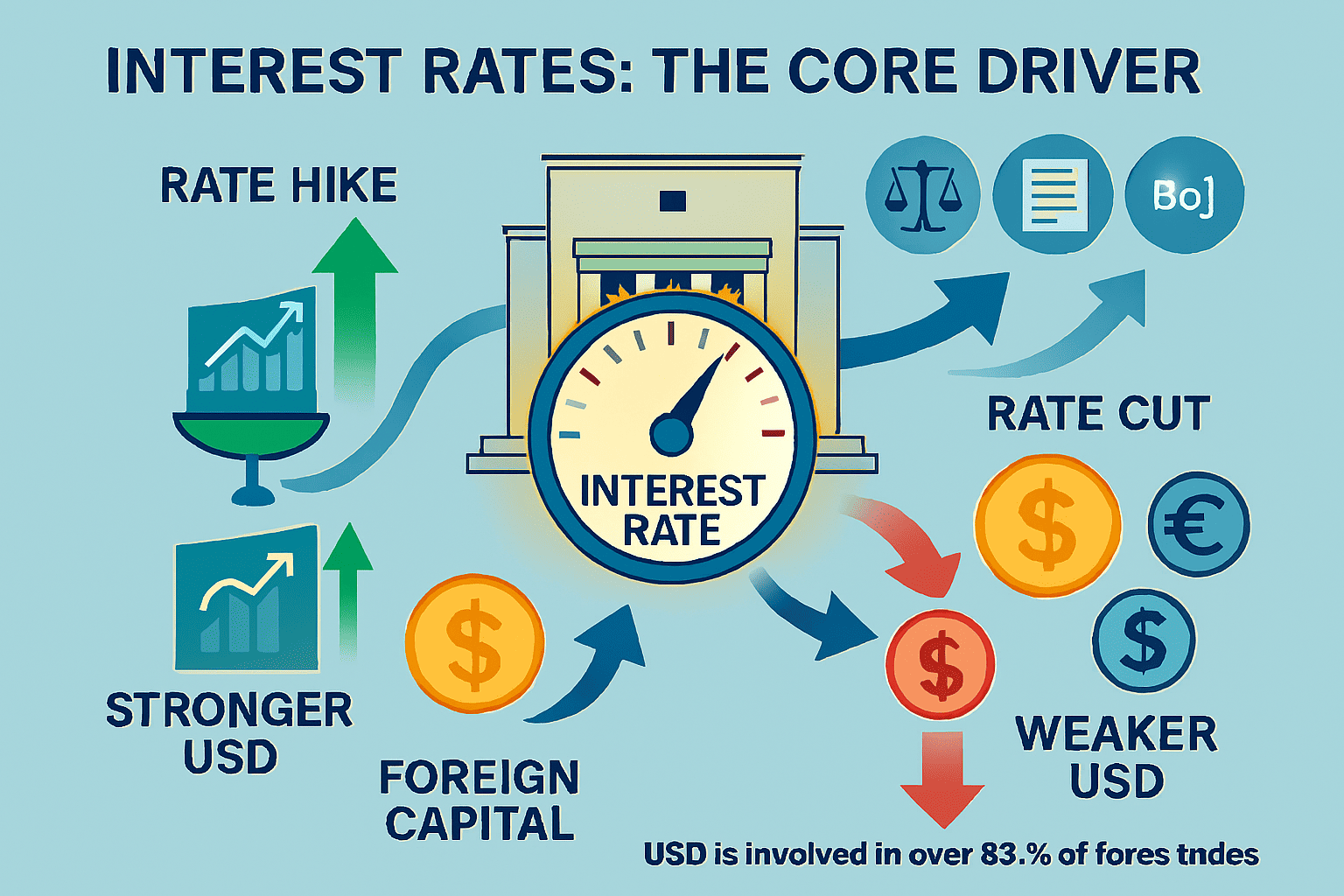
The most direct link between the Fed and currencies is through interest rate policy.
- When the Fed raises rates, U.S. bond yields rise → foreign capital flows into the U.S. → USD strengthens
- When the Fed cuts rates, yields drop → investors seek higher returns elsewhere → USD weakens
This policy not only impacts the USD, but also forces other central banks to respond:
- If the Fed tightens aggressively, it can pressure the ECB, BoE, BoJ to follow or risk weakening their currencies.
- If the Fed eases while others hold steady, it can boost other currencies (EUR, JPY, AUD) relative to USD.
3. Global Ripple Effect: It’s Not Just About the Dollar
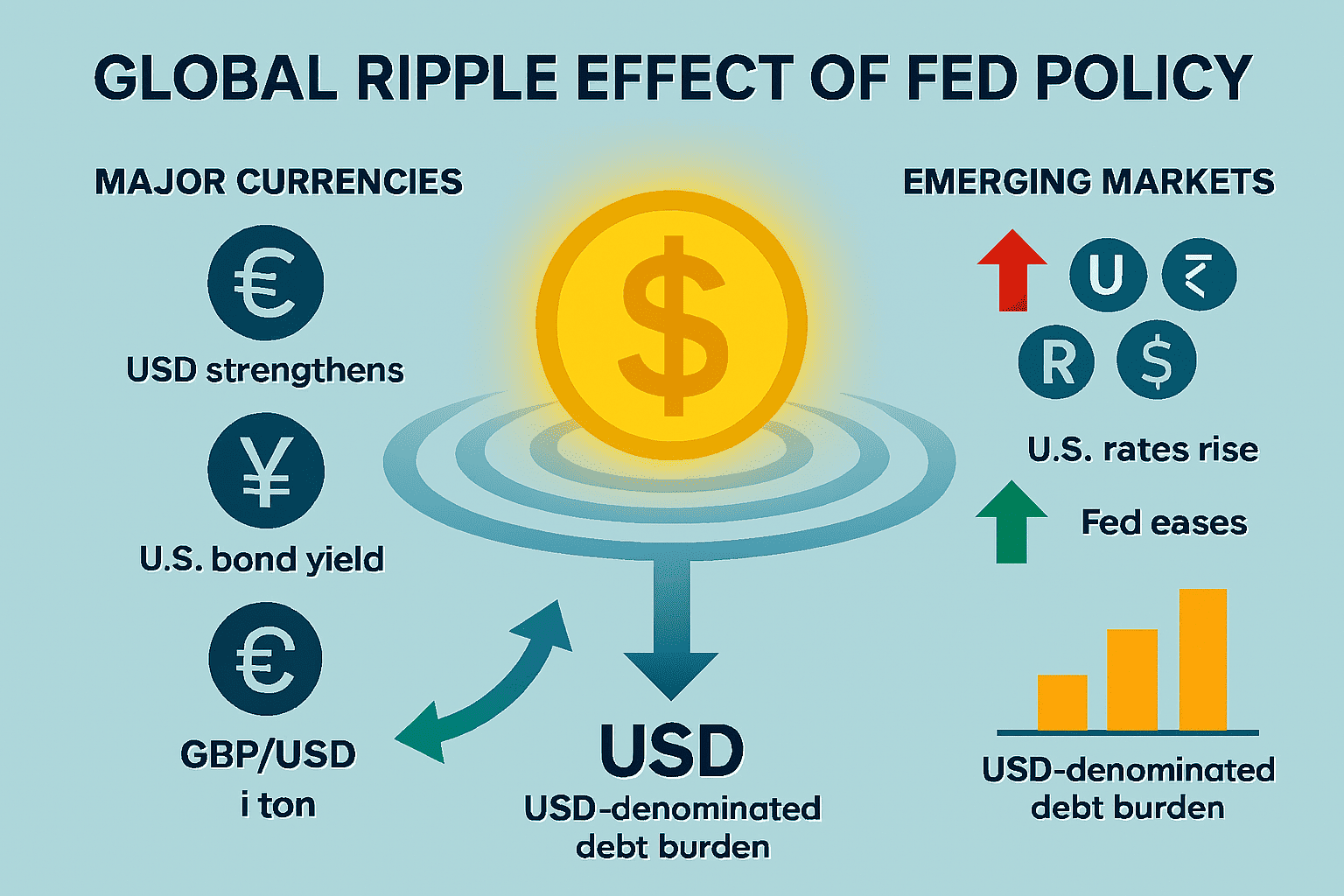
Here’s how Fed moves cascade through global FX markets:
🇪🇺 EUR/USD
- Typically the most directly impacted pair.
- Fed rate hikes = USD strength = EUR/USD falls.
- Market often prices divergence between the Fed and ECB ahead of actual announcements.
🇯🇵 USD/JPY
- USD/JPY often tracks U.S. bond yields closely.
- When Fed policy lifts Treasury yields, JPY weakens due to Japan’s ultra-low rates.
🇬🇧 GBP/USD
- Reacts strongly to Fed policy shifts, especially when UK data is neutral.
- GBP often gains when Fed sounds dovish, loses ground when Fed is hawkish.
🏦 Emerging Markets (EM)
- Higher U.S. rates = tighter global liquidity → capital exits EMs → local currencies weaken (e.g., ZAR, BRL, INR)
- Fed easing = more risk appetite → EM currencies often rally
📊 Emerging economies with high USD-denominated debt suffer the most from Fed tightening cycles.
4. The Tools Traders Watch
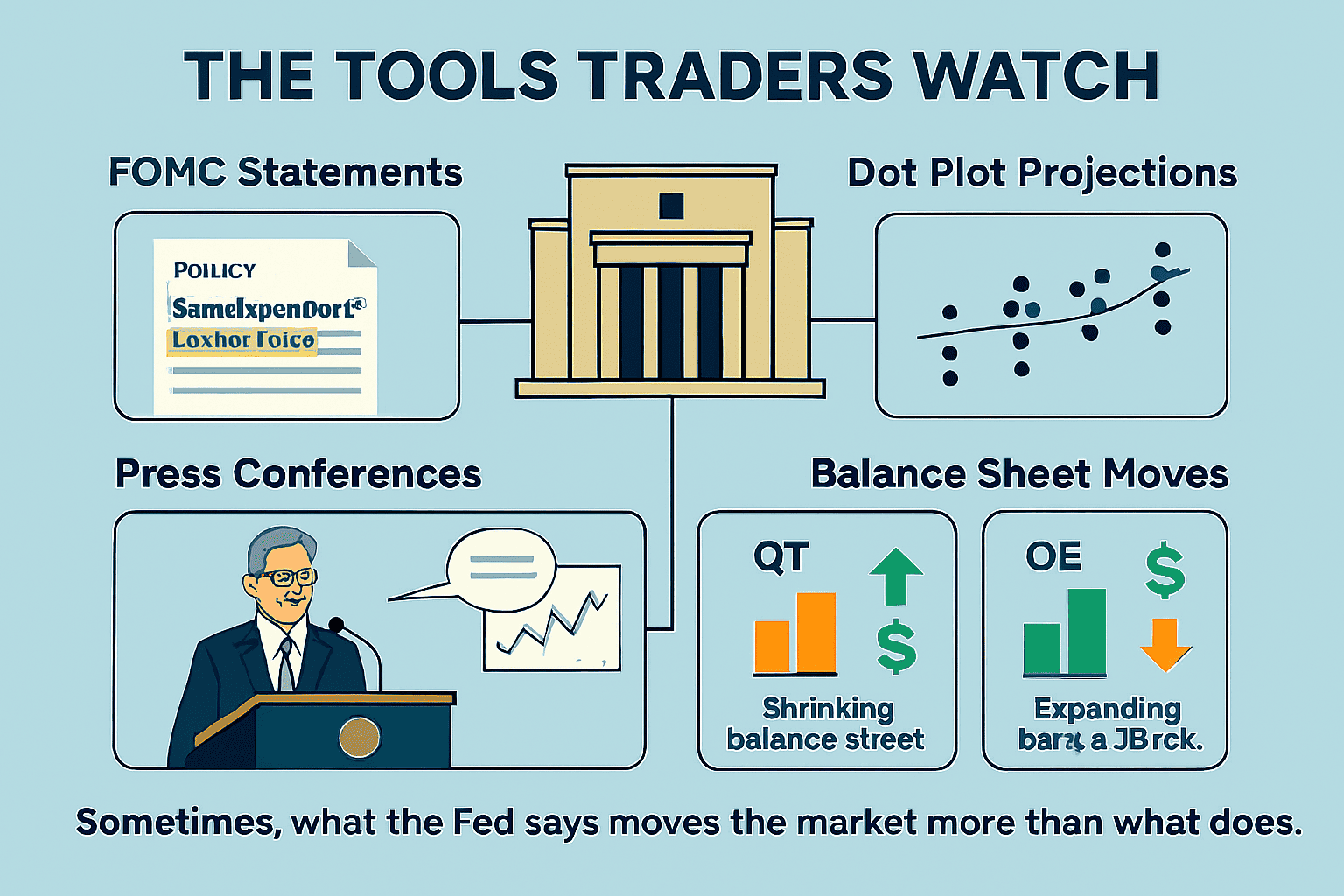
Fed decisions aren’t just about the rate hikes. Savvy traders monitor:
- FOMC Statements: Tone and wording hint at future action (e.g., “data-dependent” vs “we expect further hikes”)
- Dot Plot Projections: Shows where Fed officials see rates heading hugely influential
- Press Conferences: Jerome Powell’s language can spike or reverse markets instantly
- Balance Sheet Moves: QT (reducing assets) = tightening → bullish USD. QE = dovish → bearish USD
📌 Pro Tip: Sometimes, what the Fed “says” moves the market more than what it “does.”
5. Real-World FX Reactions to Fed Policy
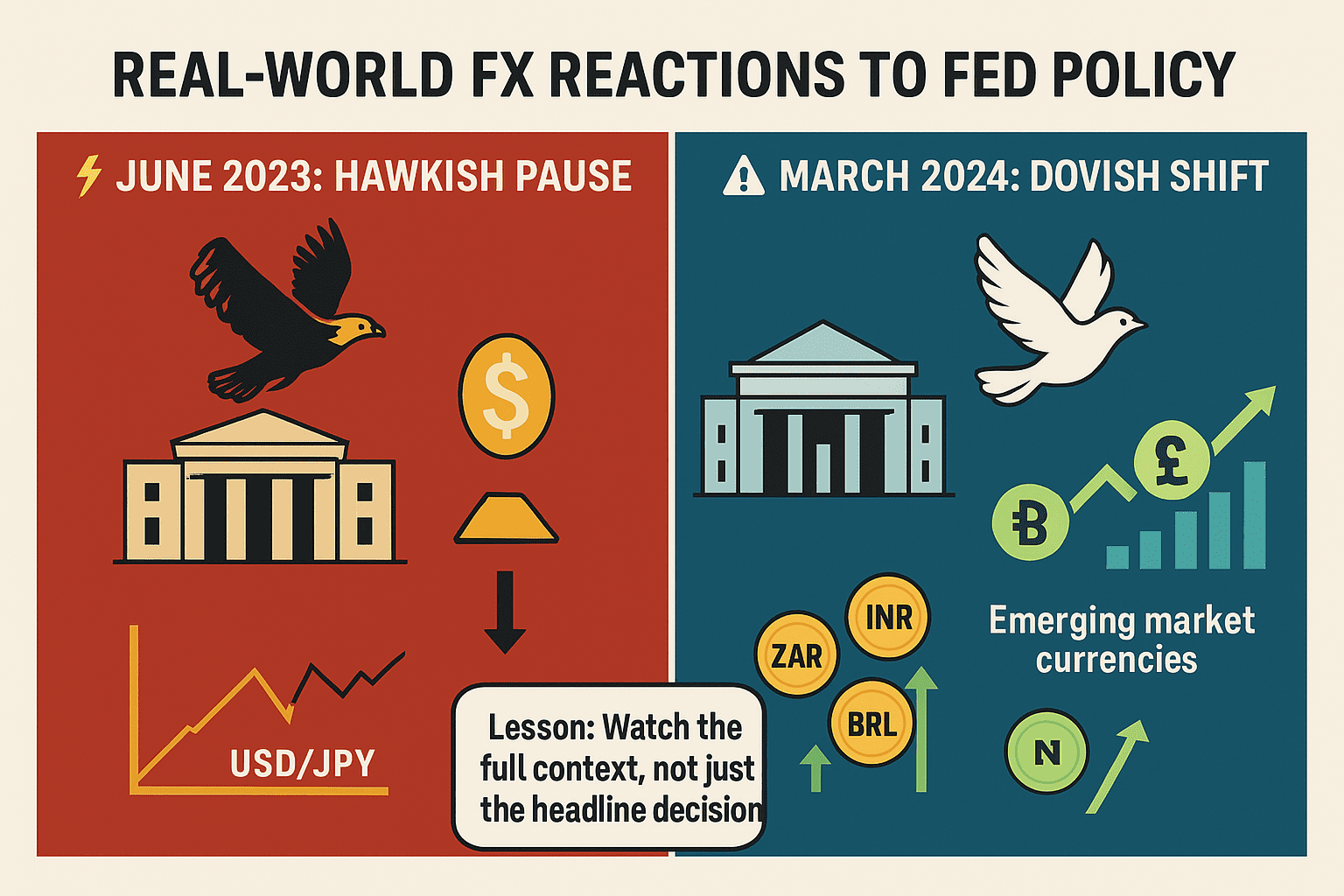
⚡ June 2023: Hawkish Pause
The Fed paused rate hikes but signaled more to come. Result?
- USD rallied on hawkish tone
- Gold dropped, and USD/JPY broke to new highs on yield strength
⚠️ March 2024: Surprise Dovish Shift
Weak job data + easing inflation led the Fed to pause future hikes.
- USD sold off across the board
- GBP/USD and EUR/USD spiked
- Emerging market currencies rallied on softer dollar
🧠 Lesson: Watch the full policy context not just the headline rate decision.
6. Trading the Fed: Strategies That Work
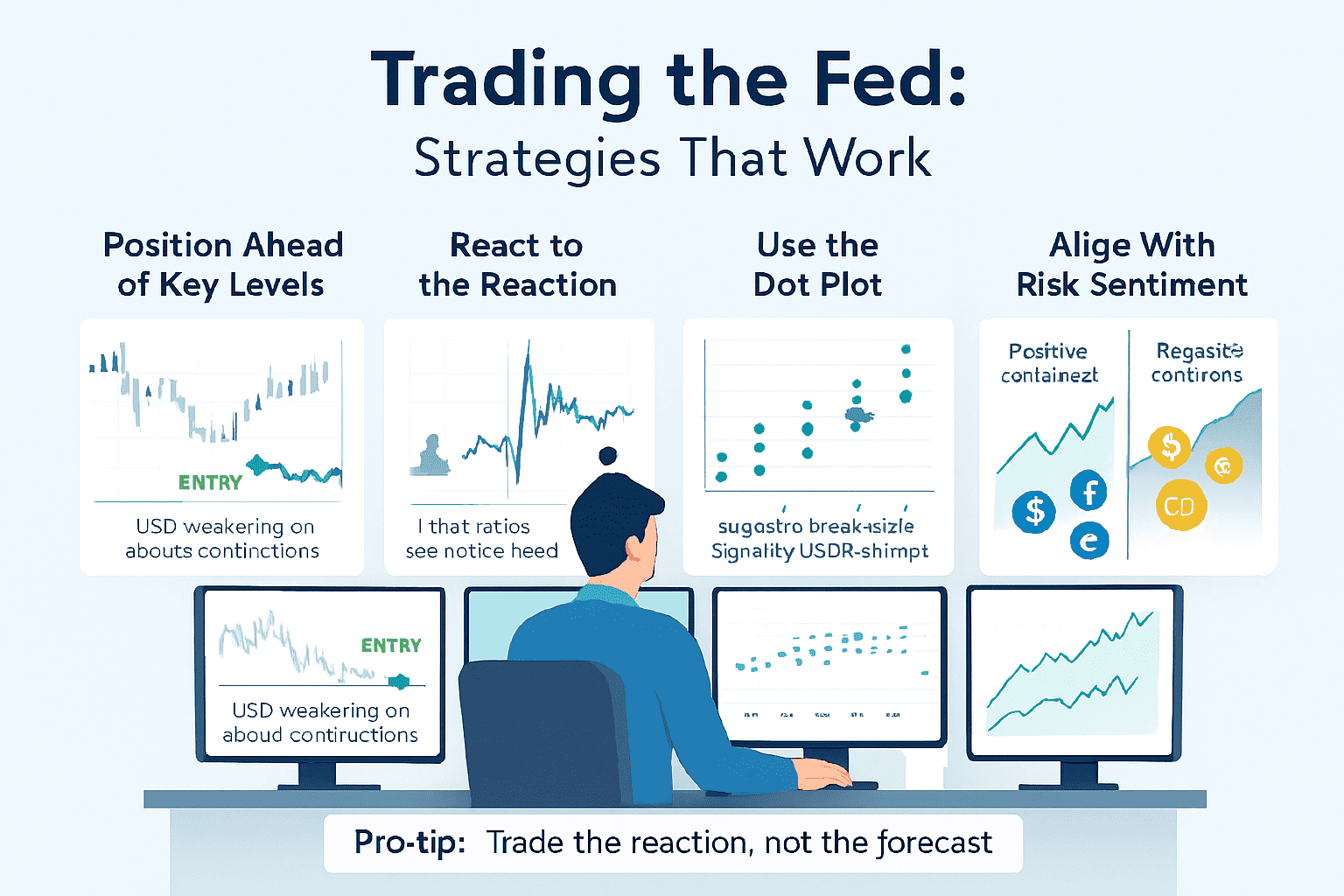
✅ 1. Position Ahead of Key Levels
Use Fed expectations as a macro backdrop. If market anticipates dovish policy, start looking for USD short setups on retracements.
✅ 2. React to the Reaction
Don’t trade the first spike after a Fed release. Let the dust settle and follow the real trend that forms 30–60 mins later.
✅ 3. Use the Dot Plot
If Fed officials are more hawkish than expected (dot plot shifts higher), prepare for USD strength even if no immediate hike happens.
✅ 4. Align With Risk Sentiment
If Fed policy supports equities and risk assets, risk currencies like AUD, NZD, GBP often rally.
If the Fed triggers panic (like aggressive hikes), expect JPY and CHF to strengthen as safe havens.
Final Thoughts
The Federal Reserve’s decisions are a global trigger in the forex market. Whether you’re trading major pairs, crosses, or exotics, what the Fed says and does will ripple through every chart on your screen.
🎯 Pro Tip: Watch the Fed like a hawk but trade the reaction, not the forecast.
As we move through 2025, with inflation stabilizing and growth diverging across economies, the Fed’s policy path will remain the compass for currency traders worldwide.