Introduction
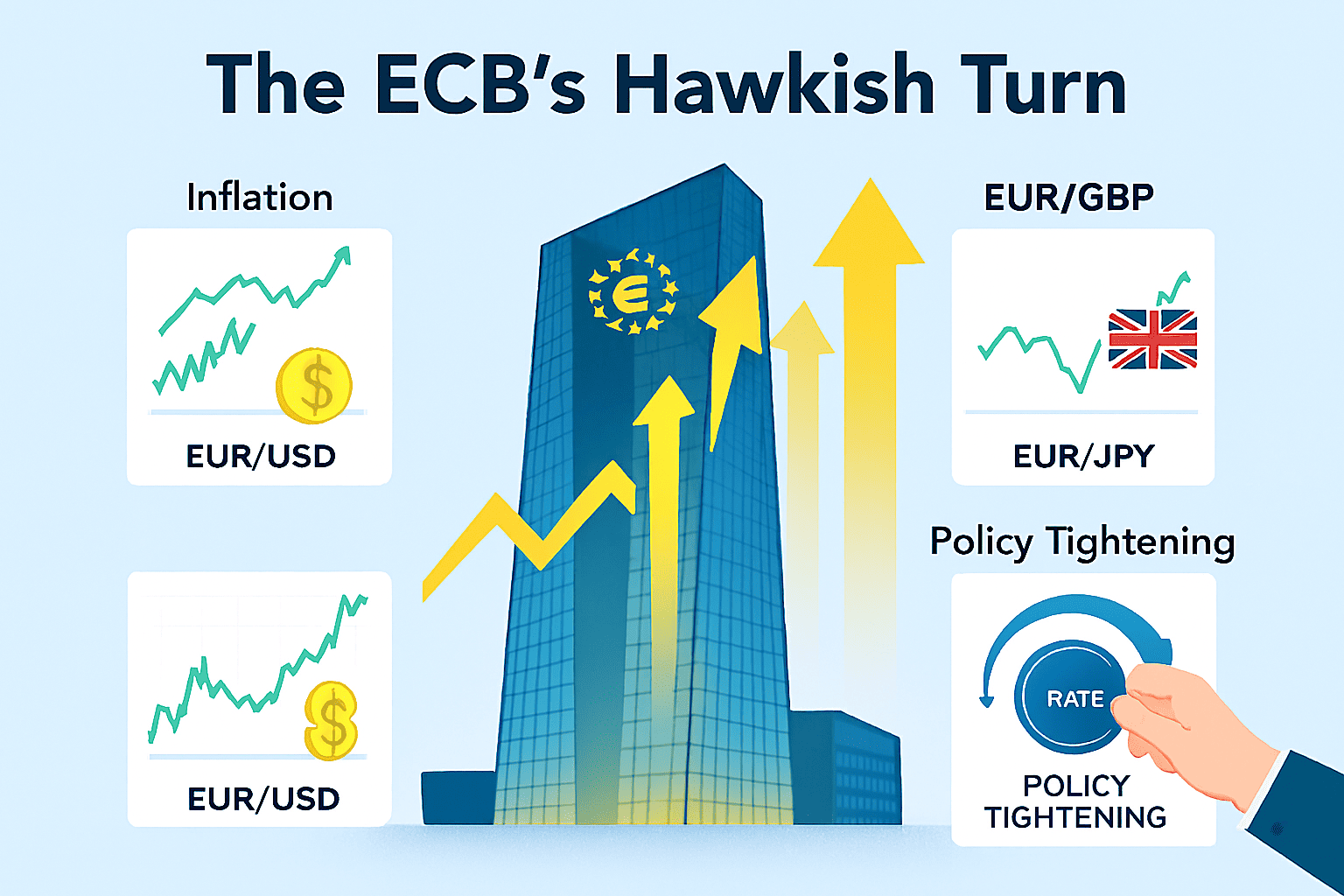
For years, the European Central Bank (ECB) was known for ultra-loose monetary policy low rates, asset purchases, and a generally dovish tone. But that narrative shifted sharply in the post-pandemic world. With inflation gripping the Eurozone and the ECB finally recognizing the need for action, we’ve seen a rare but aggressive hawkish turn.
So, what does this mean for the Euro and popular EUR pairs like EUR/USD, EUR/GBP, and EUR/JPY? And how should traders adjust their strategies in the wake of this central bank evolution?
Let’s dive into the ECB’s policy pivot and break down how it’s reshaping the forex landscape in 2025.
1. The ECB’s Policy Shift: From Dovish to Hawkish
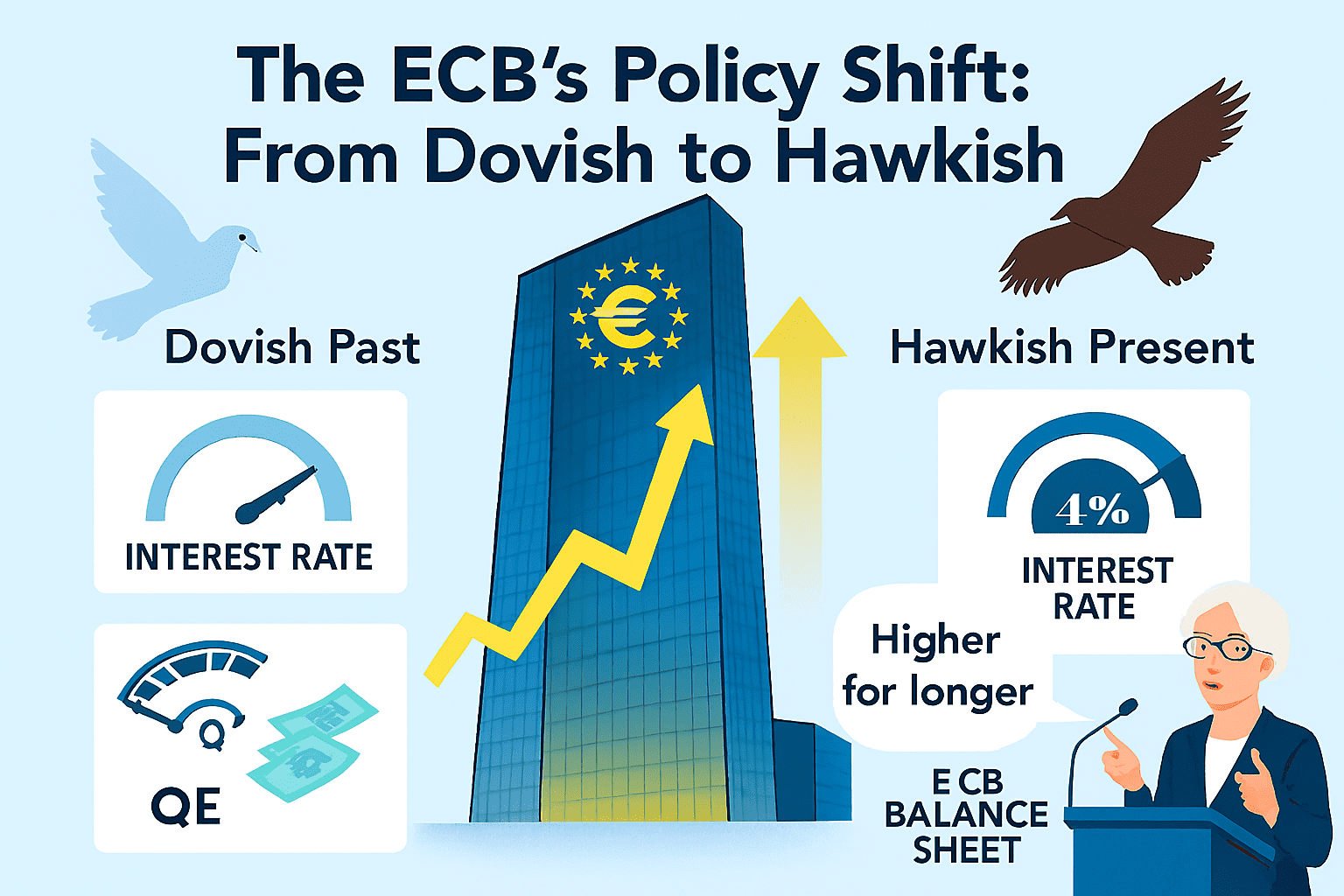
Historically, the ECB lagged behind other major central banks when it came to rate hikes. But starting in late 2022 and accelerating into 2023–2025, it flipped the script.
Key milestones in the ECB’s hawkish turn:
- Rate hikes from negative territory to over 4%
- End of quantitative easing (QE) and slow start to balance sheet reduction
- Inflation-focused rhetoric from Christine Lagarde and other officials
- Explicit warnings that rates may stay “higher for longer” despite slowing growth
🧠 The ECB is no longer just playing catch-up it’s proactively tightening in response to persistent inflation.
2. Why This Matters for EUR Pairs
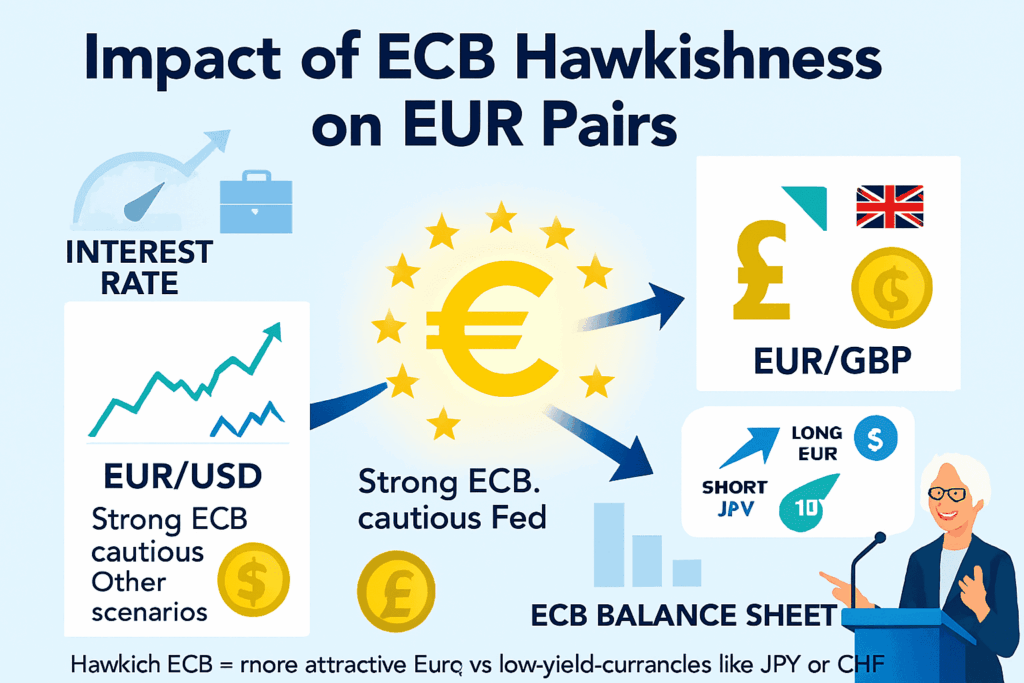
When a central bank gets more hawkish, it usually strengthens its currency by:
- Raising yields → attracting foreign capital
- Improving carry trade appeal
- Boosting investor confidence (assuming inflation is under control)
For the Euro, this has major implications.
EUR/USD
- Strong ECB + cautious Fed = EUR/USD uptrend
- If both banks tighten equally = consolidation zone
- If ECB turns cautious first = bearish reversal risk
EUR/GBP
- The Bank of England has struggled with credibility and domestic challenges (wage inflation, weak growth)
- ECB hawkishness often boosts EUR/GBP, especially if UK data underwhelms
EUR/JPY
- Japan’s ultra-loose monetary stance means EUR/JPY can explode upward when the ECB tightens
- The pair becomes a top “carry trade” candidate long EUR, short JPY = net yield
💡 The more hawkish the ECB gets, the more attractive the Euro becomes against low-yield currencies like JPY or CHF.
3. What’s Driving the ECB’s New Stance?
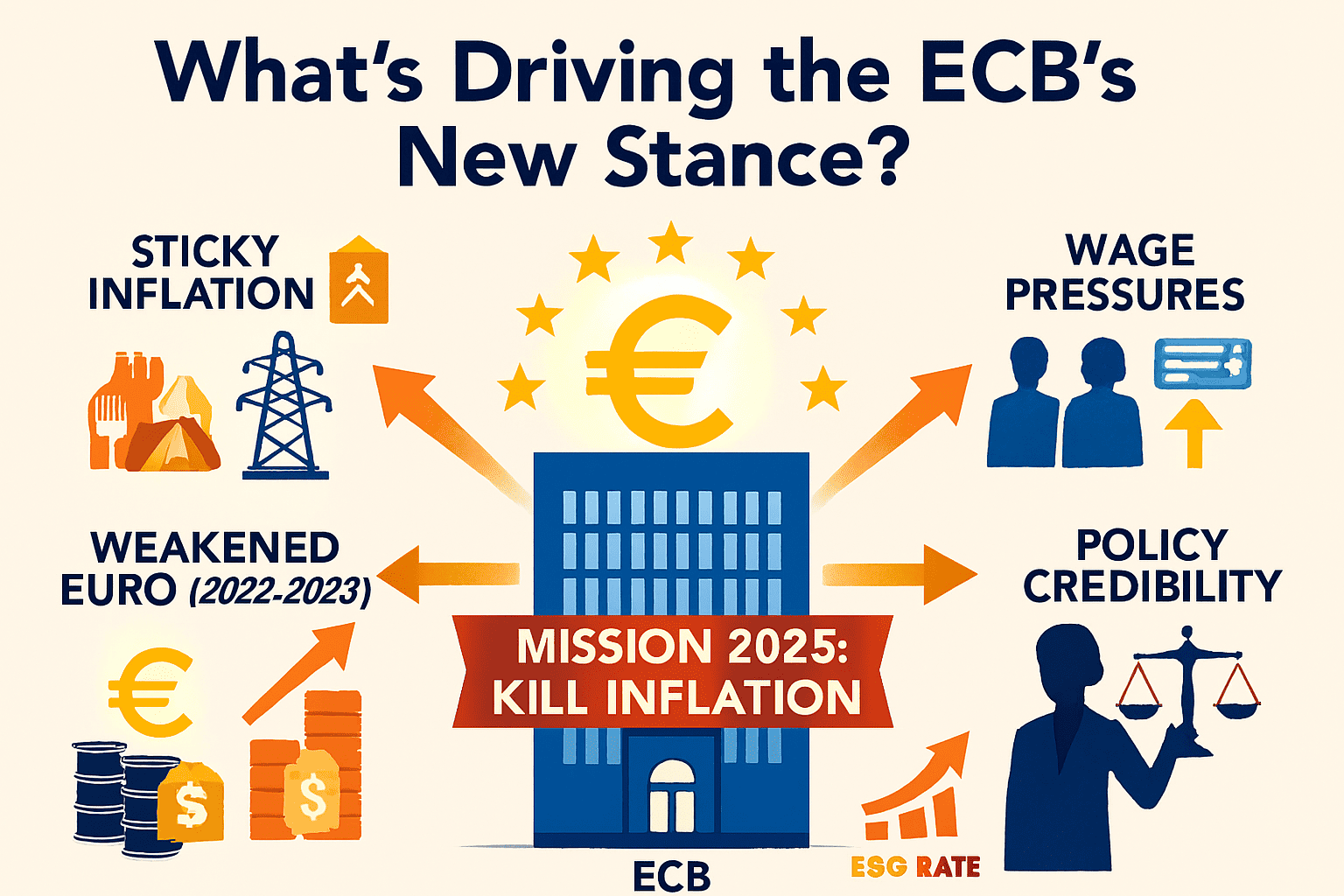
Several key pressures have forced the ECB’s hand:
- Sticky inflation, particularly in services and energy-heavy economies like Germany and Italy
- The weakened euro in 2022–2023, which made imports more expensive and fueled price pressures
- Fear of entrenched inflation expectations especially as wages begin rising across the bloc
- The desire to re-establish policy credibility after years of being seen as too slow or passive
📊 The ECB’s mission in 2025 is clear: Kill inflation, even if it slows growth. Markets are listening and reacting.
4. Risk Factors: Will the Hawkish Tone Last?
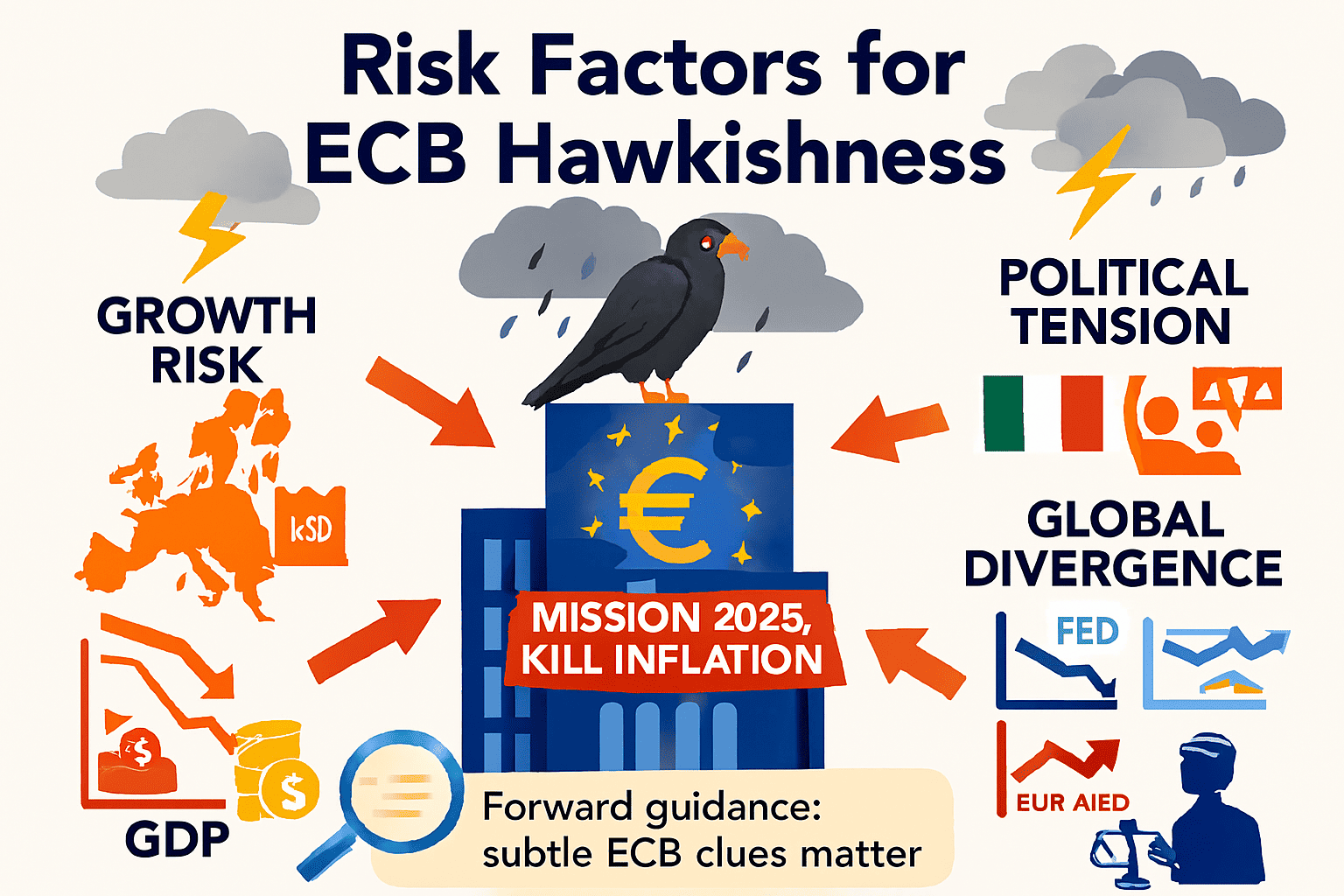
While the ECB’s hawkish stance has helped boost the euro, traders must stay aware of potential pivots:
- Growth risk: Many Eurozone economies are already showing signs of stagnation. A sharp slowdown could force the ECB to pause or even cut.
- Political tension: Countries like Italy and France are increasingly vocal about the pain of high rates on debt and households.
- Global divergence: If the Fed starts cutting while the ECB holds, EUR/USD could rise… but if both ease at the same time, Euro strength might fade.
⚠️ Watch forward guidance closely. ECB officials are known for dropping subtle clues in speeches and Q&A sessions.
5. Trading Strategies for a Hawkish ECB
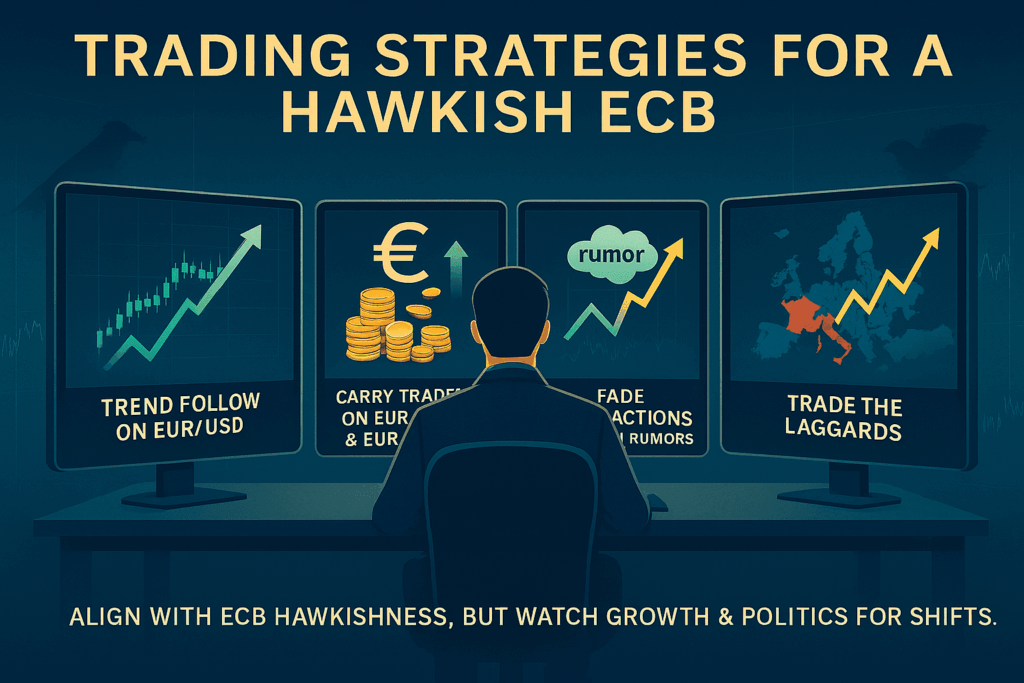
✅ 1. Trend Follow on EUR/USD
If the ECB remains hawkish while the Fed tilts dovish, look for breakout opportunities above resistance levels particularly if paired with solid Eurozone data.
✅ 2. Carry Trades on EUR/JPY and EUR/CHF
With Japan and Switzerland keeping near-zero rates, long EUR positions offer positive swap earnings making these attractive for multi-day and swing traders.
✅ 3. Fade Overreactions on Dovish Rumors
When markets prematurely price in ECB cuts, look for support bounces on Euro pairs if inflation or wages remain hot.
✅ 4. Trade the Laggards
Use weaker Eurozone economies (like Spain or Italy) as sentiment gauges. If yields in those countries spike due to ECB policy, the euro might initially strengthen, but risks grow if fragmentation fears return.
6. Real-World FX Example: EUR/USD Reaction to ECB Rhetoric
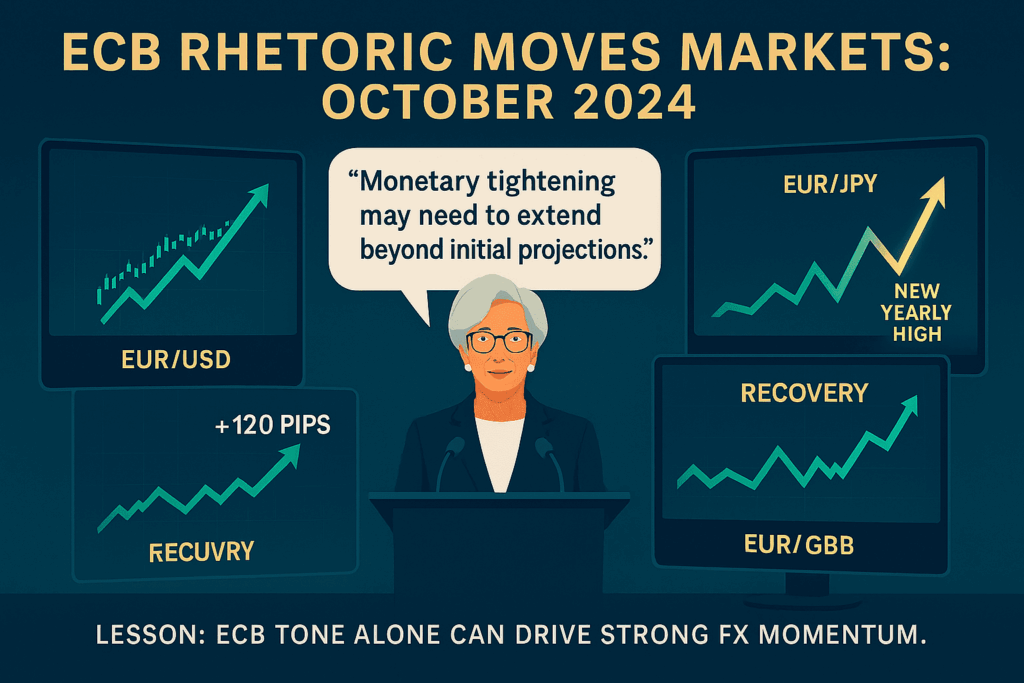
In October 2024, ECB President Christine Lagarde surprised markets by stating that “monetary tightening may need to extend beyond initial projections.”
- EUR/USD jumped over 120 pips in two days
- EUR/JPY surged to a new yearly high
- EUR/GBP regained lost ground after months of sideways action
🎯 Lesson: ECB tone alone can create strong directional momentum even without actual policy changes.
Final Thoughts
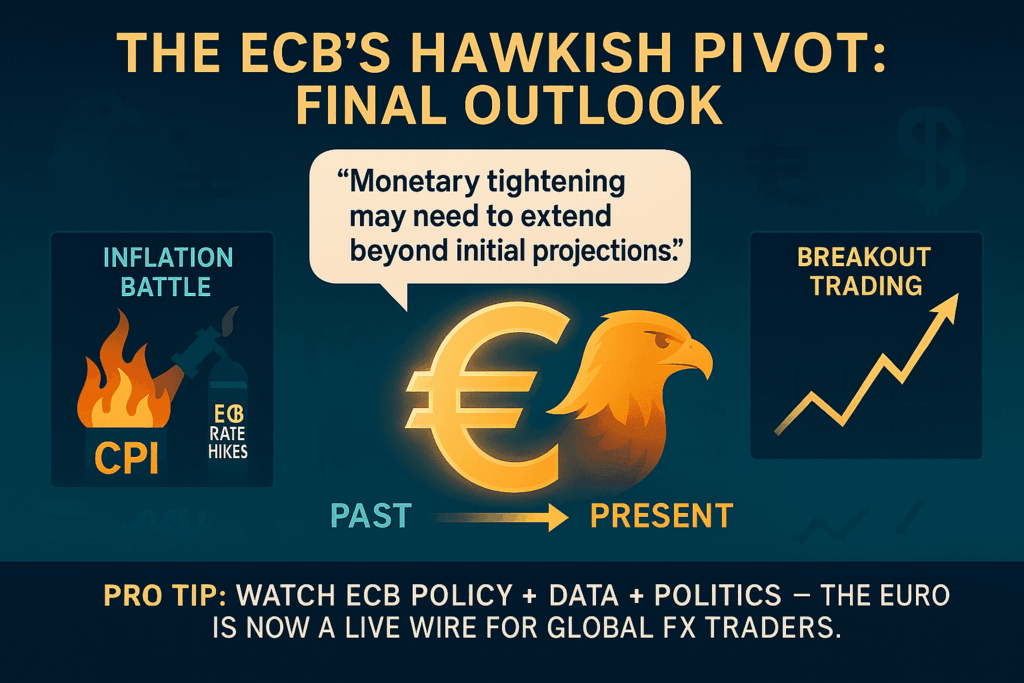
The ECB’s hawkish pivot has turned the euro from a funding currency into a potentially dominant force especially against dovish central banks like the BoJ and SNB.
📌 Pro Tip: Stay tuned not just to ECB decisions, but to economic data and political pressure that could influence future pivots.
As long as the inflation fight continues, the euro remains a live wire in global FX and a prime candidate for trend and breakout traders alike.