Introduction
Recession fears have once again gripped the global financial landscape. With slowing GDP growth, weakening consumer confidence, and rising debt levels, forex traders are asking the million-dollar question: Is the world heading into a recession in 2025? While economists debate the technical definitions, smart traders are already preparing for the impact.
In this article, we’ll explore whether a global recession is likely, how it will affect major currencies, and what strategies you can use to stay ahead in the forex market.
1. What’s Fueling the Recession Talk in 2025?
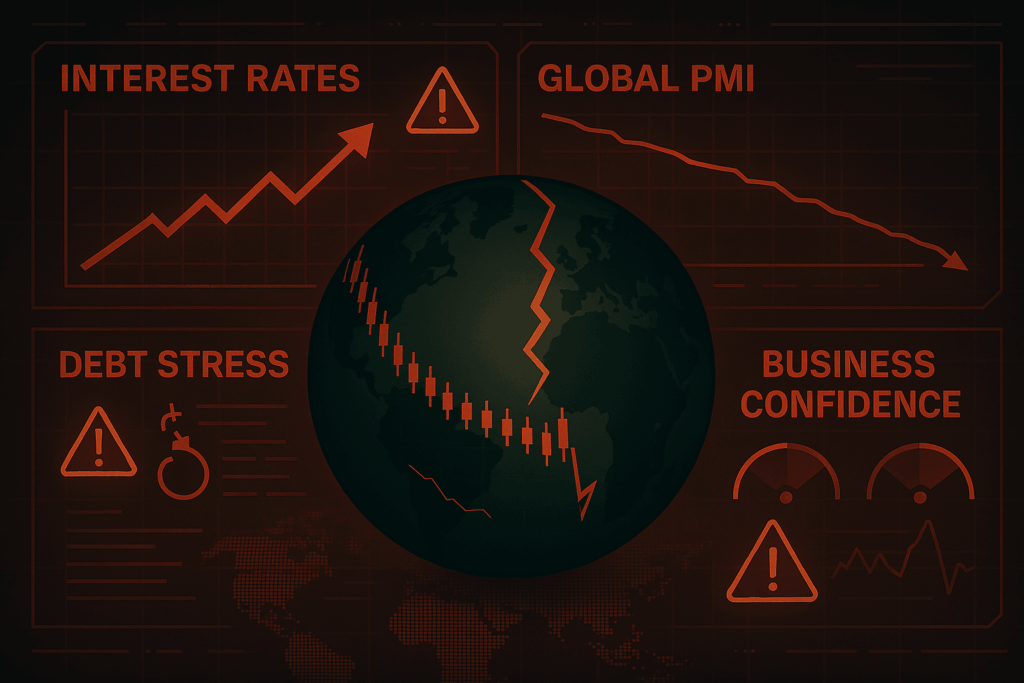
Several macroeconomic signals are pointing toward a global economic slowdown:
- Rising Interest Rates: Central banks raised rates aggressively in 2023–24 to tame inflation. But now, higher borrowing costs are strangling investment and consumer spending.
- Declining Manufacturing Activity: PMI (Purchasing Managers’ Index) data from the US, EU, and China show persistent contraction.
- Souring Business Sentiment: Multinationals are cutting forecasts, pausing hiring, and slowing capital expenditure.
- Mounting Debt Stress: Developing nations are under severe pressure due to rising bond yields and a strong US dollar.
📊 According to the IMF, global growth projections for 2025 have been revised downward for the third consecutive quarter.
2. Which Economies Are Most at Risk?
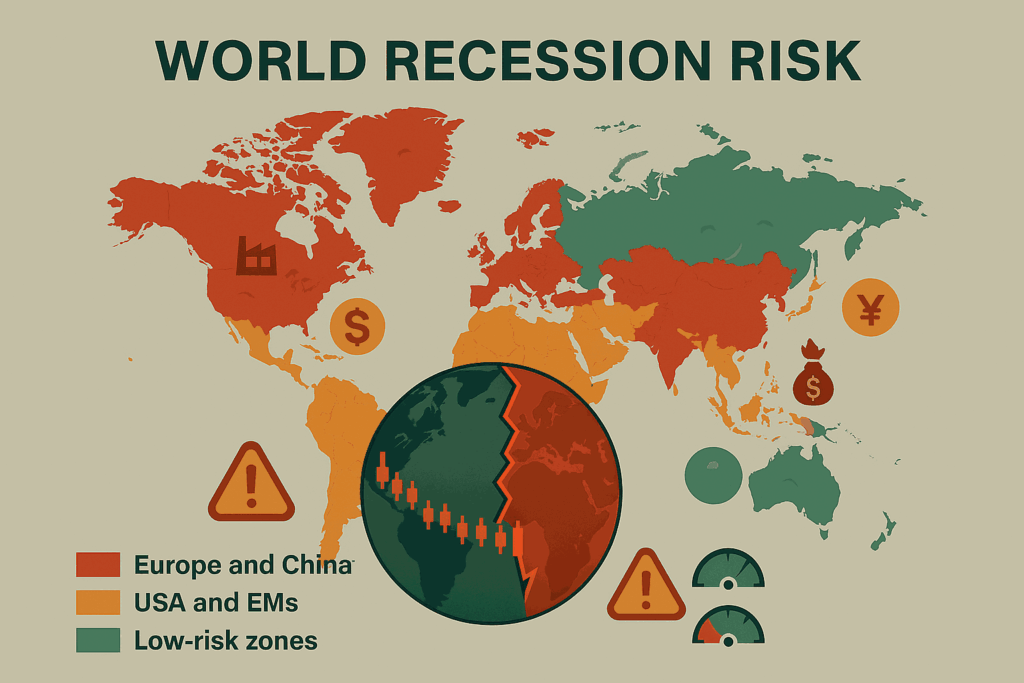
While the recession outlook varies by region, here’s a quick breakdown:
- United States: A shallow, technical recession is possible if rate cuts come too late. Labour markets remain tight but are showing signs of softening.
- Europe: Already teetering on stagflation, with Germany facing an industrial slowdown and the ECB caught in a policy trap.
- China: Real estate turmoil and sluggish domestic consumption are weighing on recovery efforts.
- Emerging Markets: Vulnerable to capital outflows, inflation shocks, and rising debt repayments.
3. Forex Implications: What Happens to Major Currency Pairs?
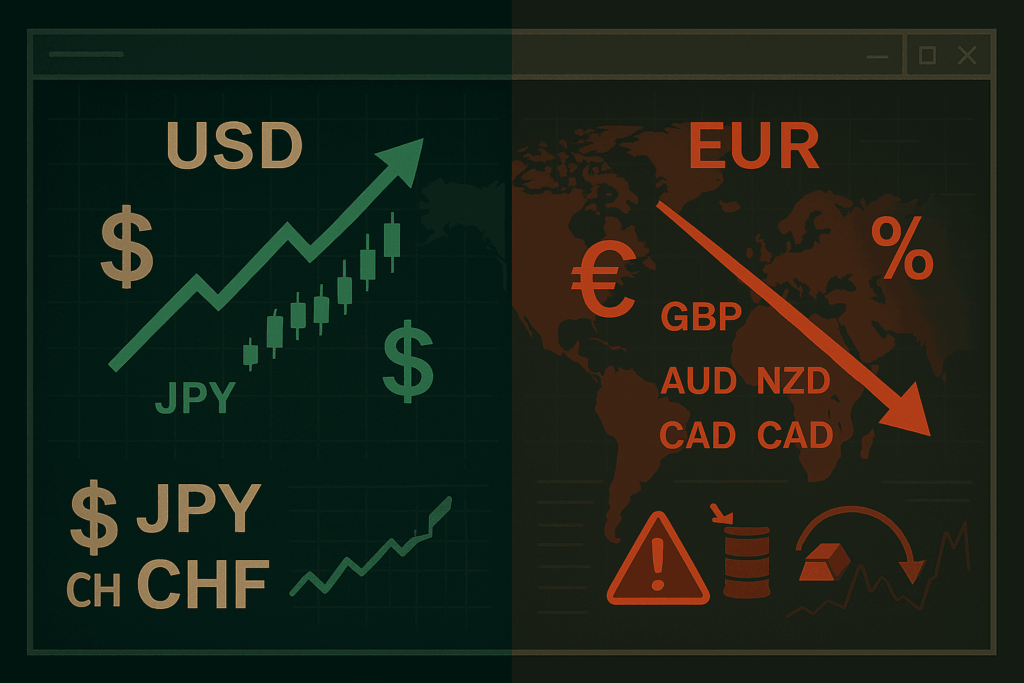
🟢 USD: King Dollar or Overstretched?
In early recession phases, the U.S. Dollar often strengthens as a safe-haven. But as recession deepens and rate cuts begin, USD could lose steam.
✅ Play: Buy USD during early panic → Short USD if Fed pivots aggressively.
🔵 EUR & GBP: Weak Fundamentals, Weak Currencies
The Eurozone and UK may suffer deeper economic slowdowns due to energy costs and political fragmentation. Traders often short EUR/USD and GBP/USD during global downturns.
🔻 Play: Short rallies in EUR and GBP; watch ECB/BoE policy delays for added weakness.
🔴 JPY & CHF: Safe-Haven Currency Comeback
In recessions, the Japanese Yen and Swiss Franc shine. Investors shift capital into these currencies due to Japan’s trade surplus and Switzerland’s financial neutrality.
🛡 Play: Long JPY or CHF during global risk-off sentiment spikes.
🟠 AUD, NZD, CAD: Commodity Currencies on the Back Foot
These currencies are tied to global demand. As commodity prices fall during recessions, so do AUD/USD, NZD/USD, and CAD/USD.
📉 Play: Avoid long positions in commodity-linked currencies unless paired with a weaker currency like GBP.
4. What Forex Traders Should Be Doing Now
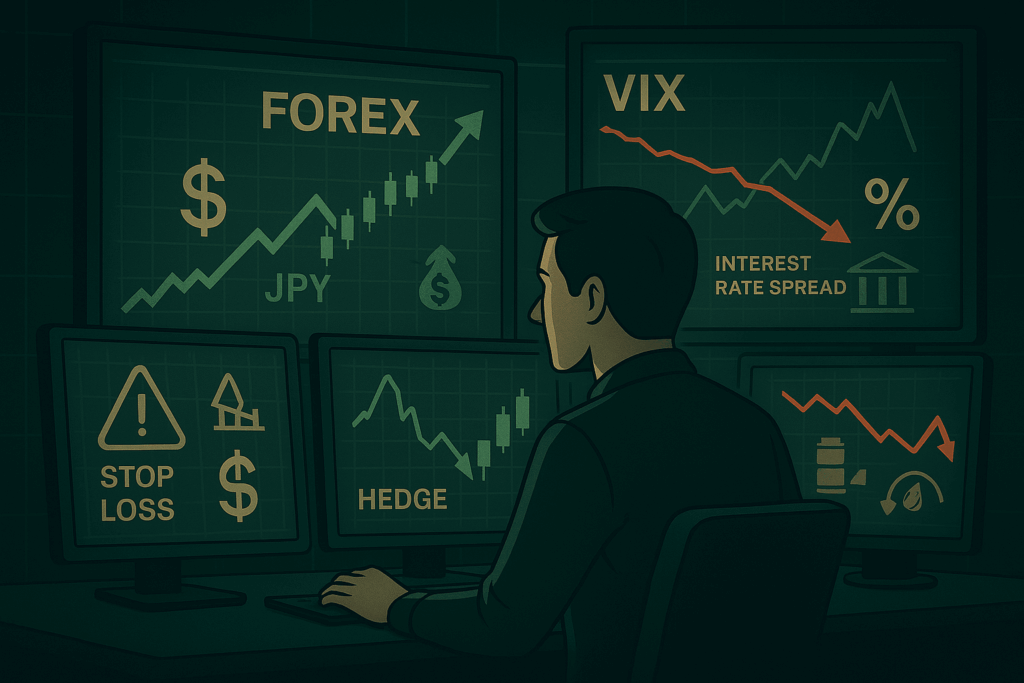
Whether we face a full-blown global recession or just slow growth, traders need to stay tactical. Here’s your game plan:
✅ 1. Trade Risk Sentiment, Not Just Fundamentals
Use tools like the VIX, equity indices, and bond yields to gauge market fear. Forex often reacts faster than traditional markets.
✅ 2. Focus on Central Bank Divergence
As some central banks cut and others hold, watch rate spreads closely. This divergence can offer powerful swing trade opportunities.
✅ 3. Hedge Against Volatility
Use options or diversified positions to protect your account. Recession periods often produce unexpected black swan events.
✅ 4. Prioritize Capital Preservation
High volatility = high risk. Reduce position size, tighten stop losses, and don’t chase every headline move.
5. Historical Insight: What Did Past Recessions Teach Us?
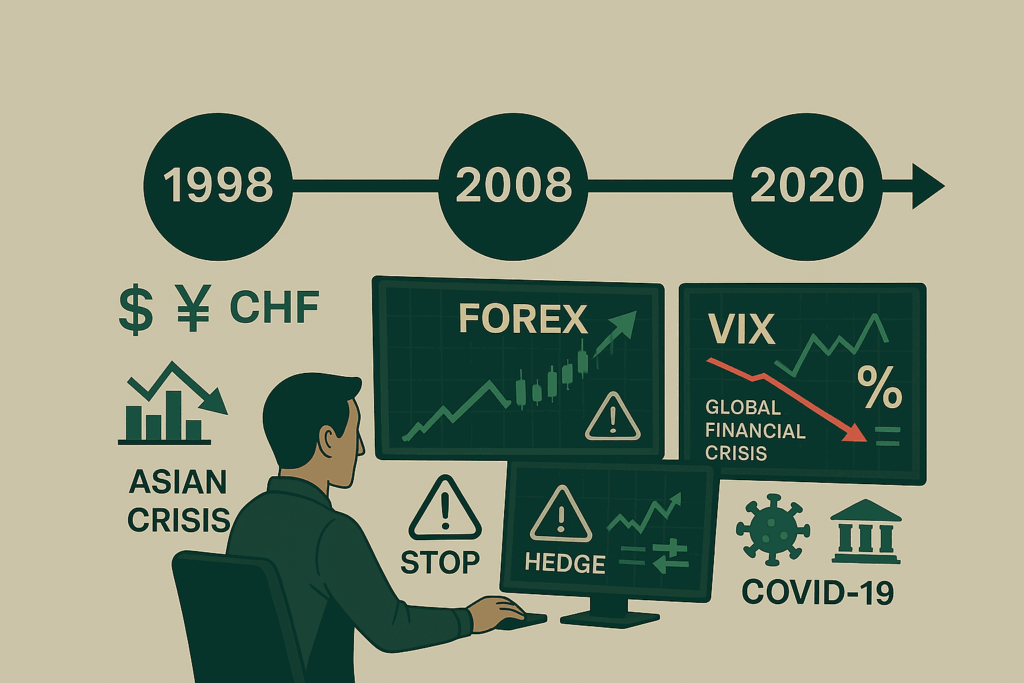
- 2008: Massive USD rally initially, followed by Fed easing and reversal.
- 2020 (COVID): Brief panic-led USD surge, then unprecedented global liquidity flooded the system.
- 1998 Asian Crisis: JPY soared as capital fled EMs, while USD/CHF held firm.
📚 Lesson: Safe-haven currencies usually dominate early → policy and stimulus dictate the second phase.
Conclusion: Prepare, Don’t Predict
Whether or not a global recession officially hits, the market’s fear of recession is enough to drive major forex moves. Instead of guessing economic outcomes, respond to market behavior. Monitor key data, track central banks, and stay flexible in your trading approach.
In 2025, it won’t be the smartest trader who wins it will be the most adaptable.