Introduction
Central banks don’t raise or cut interest rates in isolation they do it in cycles. These rate hike (and cut) cycles shape global capital flows, shift risk sentiment, and dramatically influence currency valuations.
For forex traders, adapting to these cycles isn’t optional it’s essential. If you’re not evolving your strategy based on where we are in the rate cycle, you’re likely fighting the trend or missing high-probability trades.
In this article, we break down how rate hike cycles work, how they affect different stages of the forex market, and how to tactically adjust your trading approach at each phase.
1. Understanding Rate Hike Cycles
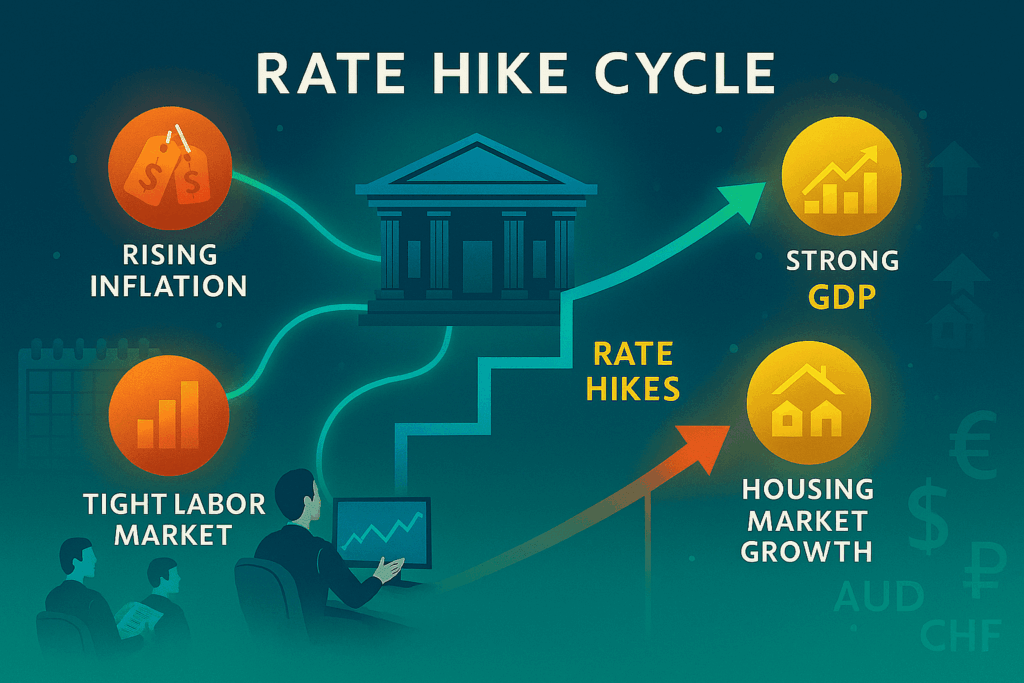
A rate hike cycle is a period during which a central bank consistently raises interest rates to combat inflation or prevent an overheated economy.
Typical drivers:
- Rising inflation
- Strong economic growth
- Tight labor markets
- Overheating credit or housing markets
🧠 Remember: Central banks rarely hike once. They telegraph multiple hikes over months giving traders clear direction.
2. How Rate Hike Cycles Affect Currencies
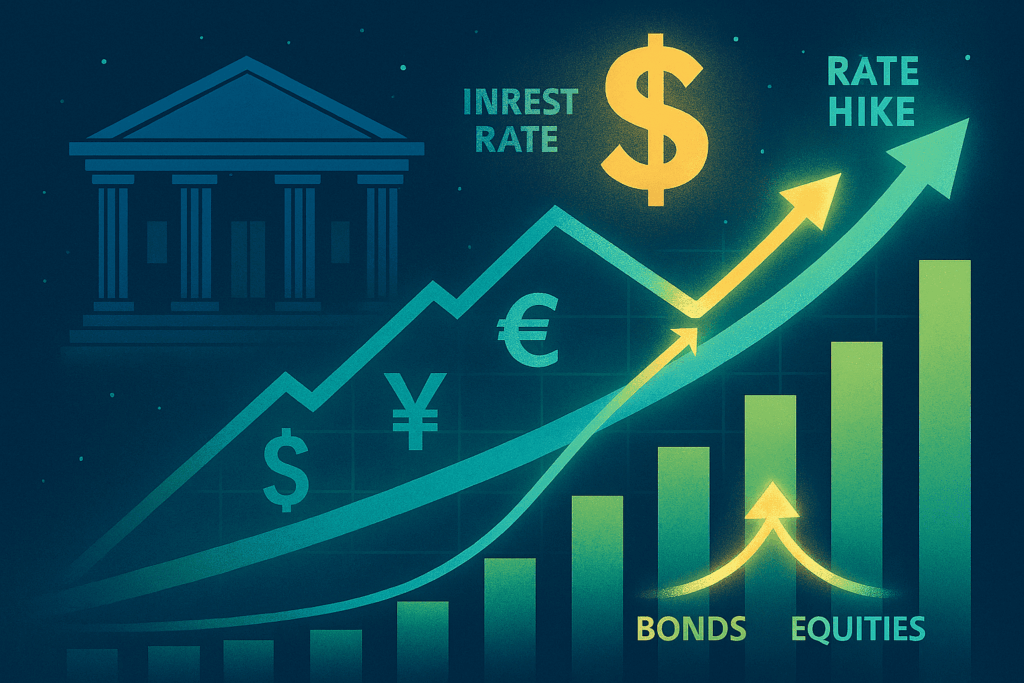
✅ Short-Term Effects
- Expectations of a rate hike can boost the currency even before the first hike.
- Traders buy the rumor (hawkish talk) and sell the fact (actual hike).
✅ Mid-Cycle Effects
- If the central bank continues to raise rates and the economy holds up, the currency often trends stronger for several months.
- Capital inflows into bonds and equities boost demand for the currency.
✅ End-of-Cycle or Pause
- Once hikes slow or end, currency strength often fades.
- Market begins pricing in future cuts, especially if data weakens.
📈 Example: In 2022–2024, the USD surged during the Fed’s aggressive hiking cycle. When the Fed paused, the USD entered a consolidation phase.
3. Key Currency Pairs in a Hike Cycle
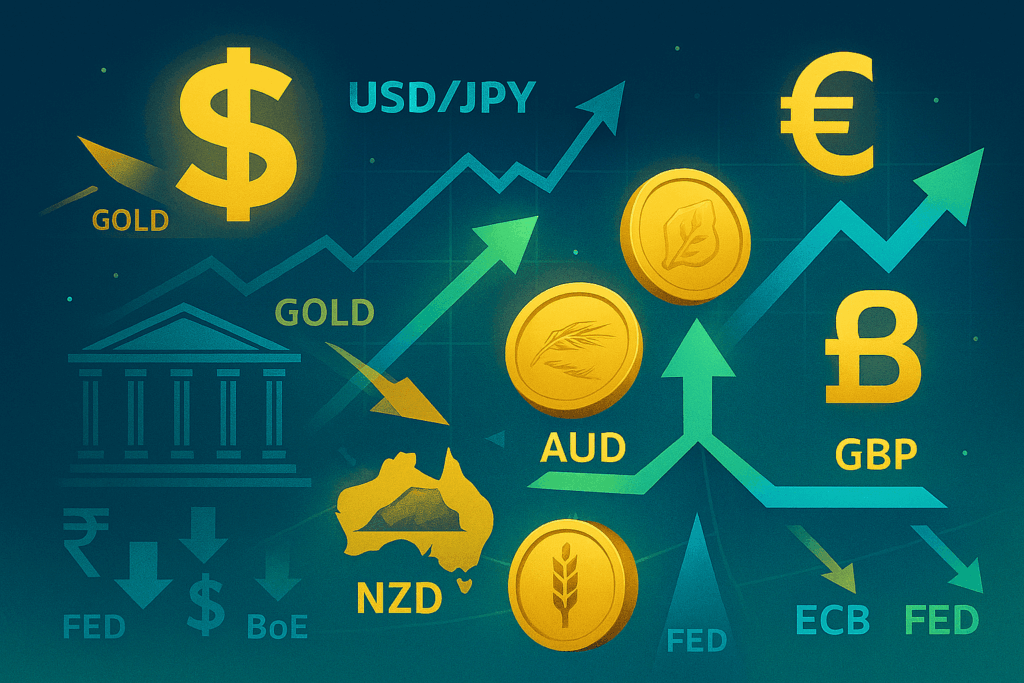
- USD: Always reacts strongly to Fed guidance. Hikes boost USD/JPY, weaken gold, and suppress risk assets.
- AUD & NZD: Rate-sensitive and closely tied to commodity cycles.
- GBP & EUR: React strongly to diverging cycles between BoE, ECB, and Fed.
- EM Currencies: Often suffer during global rate hike cycles due to capital outflows.
4. Trading Strategies for Different Stages of the Cycle
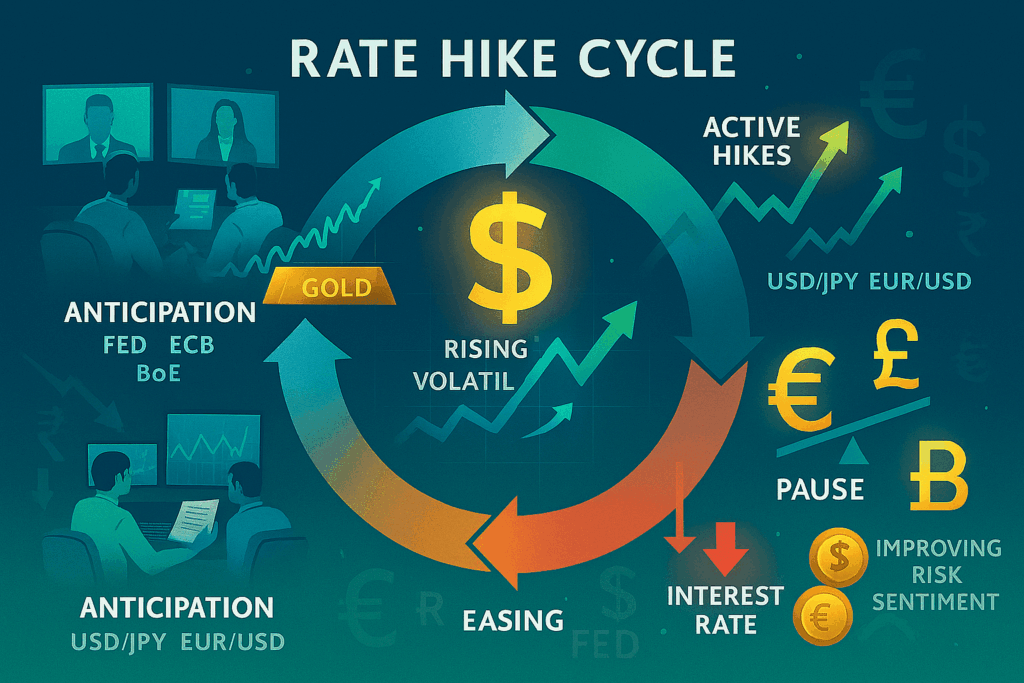
🔁 Stage 1: Anticipation of Hikes
- Volatility increases on rumors and central bank speeches.
- Strategy: Trade breakouts on hawkish surprises or data beats.
- Look for setups in pairs where one bank is turning hawkish while the other remains dovish (e.g., EUR/USD, USD/JPY).
🔁 Stage 2: Active Hiking Phase
- Currency is trending as hikes roll out.
- Strategy: Trend-following works well. Use pullbacks to enter in the direction of the stronger central bank.
- Focus on carry trades (e.g., long high-yielding currencies like USD or NZD vs low-yielding JPY/CHF).
🔁 Stage 3: End of Hike / Pause
- Market begins questioning sustainability of hikes.
- Strategy: Fade overextensions, look for reversal patterns. Start eyeing weak data or dovish guidance.
- Be ready to rotate into range-bound or reversal strategies.
🔁 Stage 4: Easing Expectations
- Talk shifts to rate cuts.
- Strategy: Position ahead of the pivot. Risk sentiment may improve, favoring risk-on currencies like AUD, GBP, or emerging market FX.
📌 Tip: The biggest profits often come from anticipating the shift between stages not just reacting to rate decisions.
5. Tools to Track Rate Cycle Impact
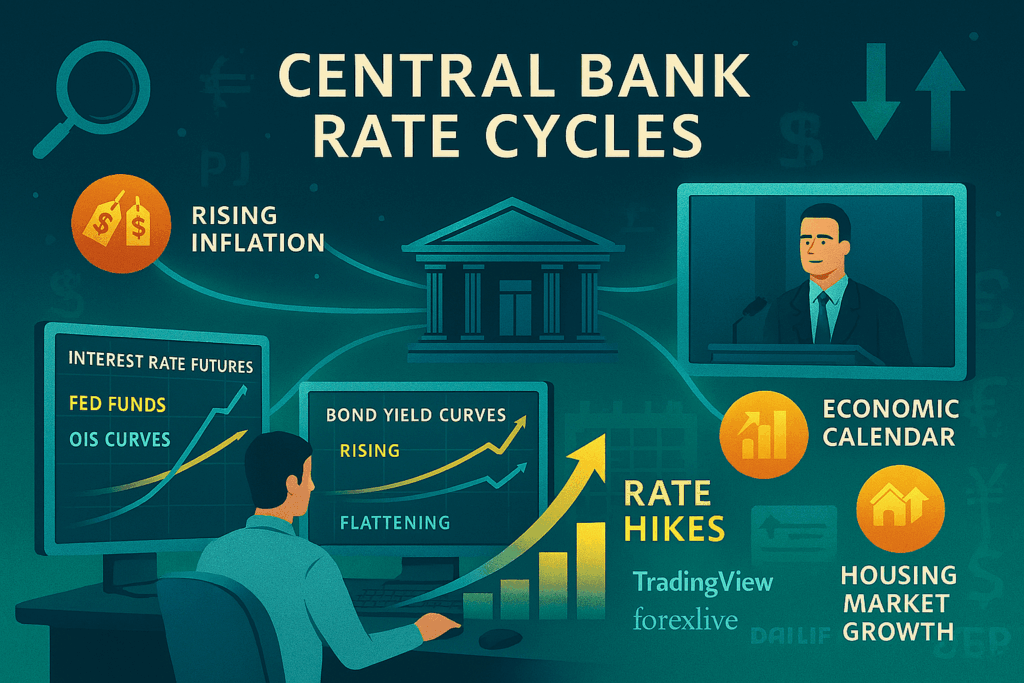
- Interest Rate Futures (like Fed Funds Futures or OIS): Show market expectations for rate paths.
- Bond Yields: Rising yields signal hike anticipation; flattening curves can warn of a pause or reversal.
- Economic Calendars: Keep tabs on inflation, jobs, and wage data these drive central bank tone.
- Central Bank Commentary: Follow speeches, pressers, and meeting minutes for tone shifts.
Websites like TradingView, Forexlive, and DailyFX offer real-time tools for policy monitoring.
6. Real-World Example: Fed Hiking Cycle (2022–2024)
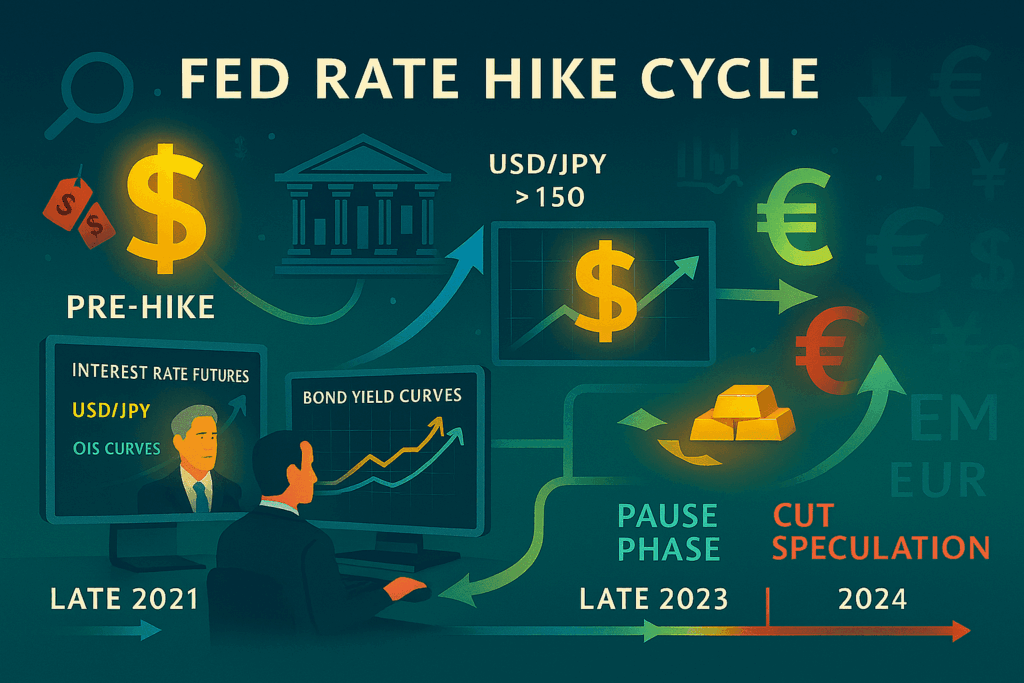
- Pre-Hike Phase (Late 2021): USD started rising as Powell signaled inflation concerns.
- Hike Phase (2022–2023): USD surged across the board USD/JPY exploded above 150.
- Pause Phase (Late 2023): USD entered consolidation; gold rebounded.
- Cut Speculation (2024): Market priced in Fed easing → USD strength faded → EM and EUR rebounded.
🎯 Lesson: Traders who adjusted their strategy at each phase captured massive macro moves.
Final Thoughts
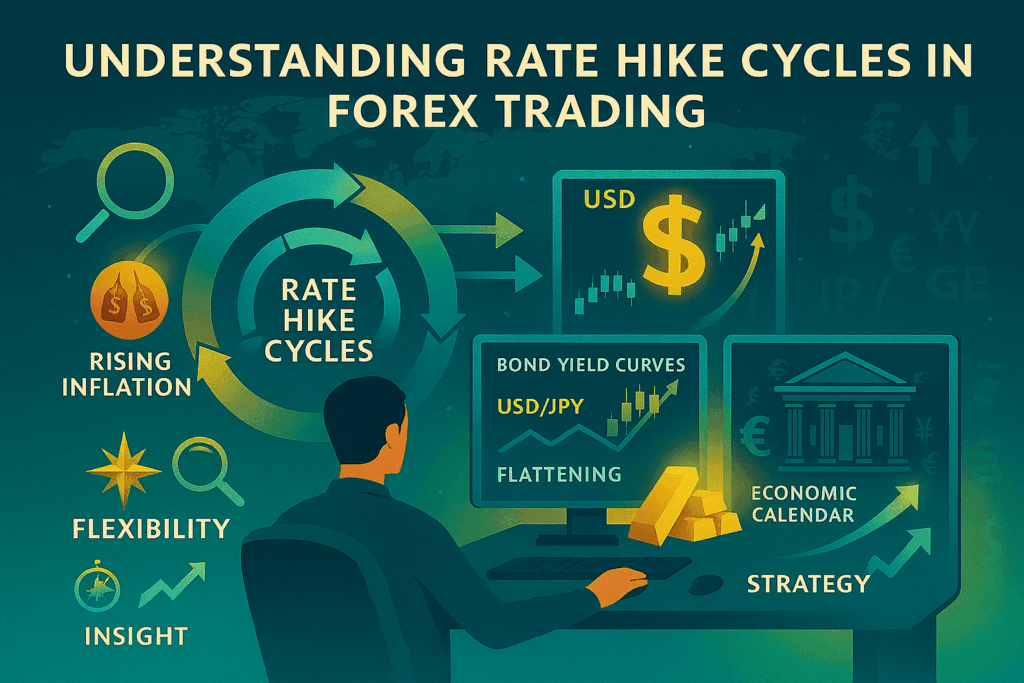
Understanding and adapting to rate hike cycles is one of the most powerful edges a forex trader can develop. These cycles don’t just move currencies they shape entire market regimes.
🔑 Pro Tip: Ask yourself, “Where are we in the cycle?” before every major trade. Your strategy should change depending on the answer.
In 2025, with central banks diverging again some hiking, some pausing, some cutting the best traders will be those who can stay flexible, informed, and aligned with the cycle, not the noise.