Introduction
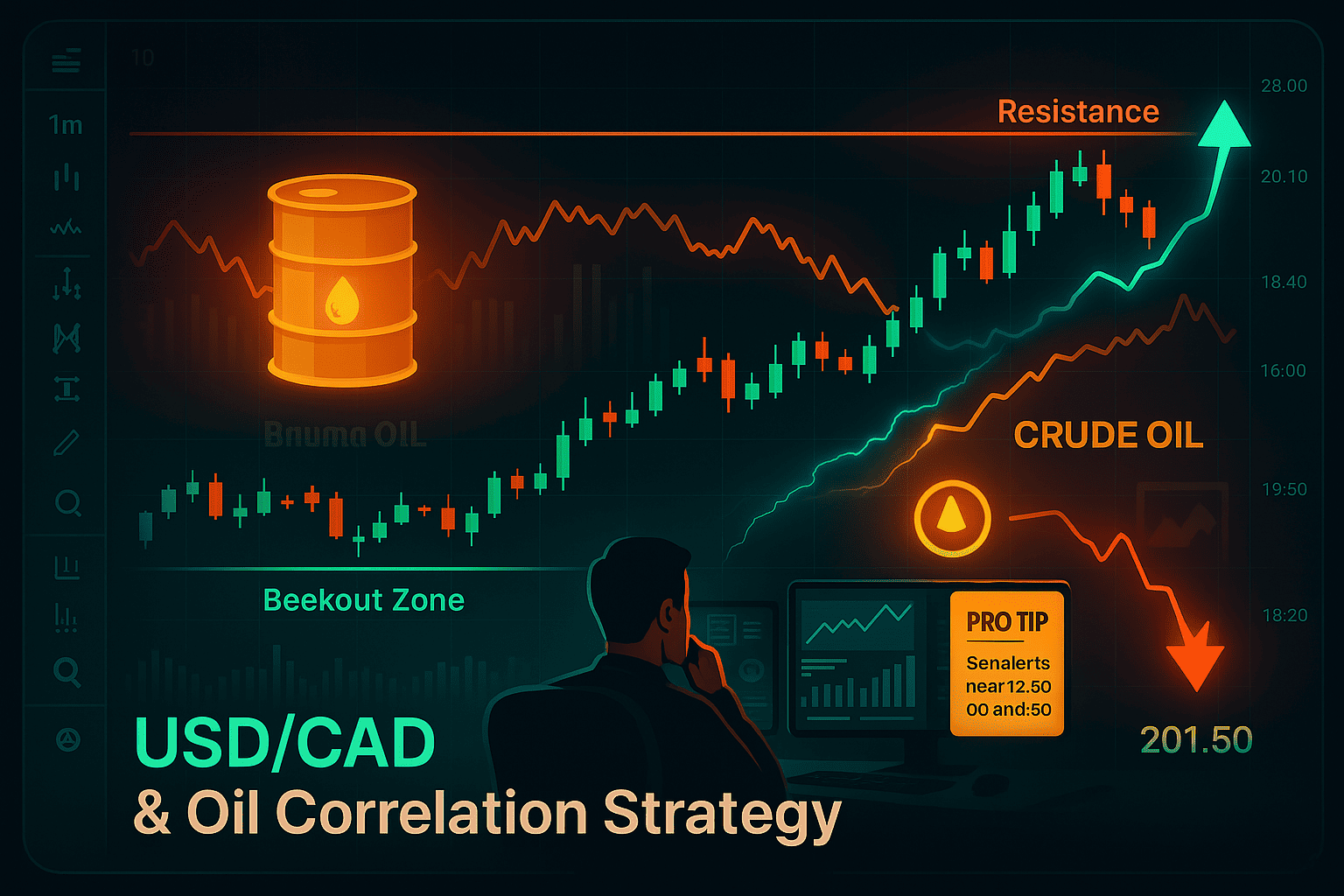
The USD/CAD currency pair has a reputation for being one of the most commodity-sensitive pairs in the forex market. That’s because Canada is a major oil exporter, and its economy is closely tied to energy prices. Meanwhile, the U.S. Dollar dominates global trade and often reacts inversely to commodity price movements. This unique relationship between oil and USD/CAD can offer savvy traders some of the most reliable correlation-based opportunities if you know what to look for.
In this article, we’ll break down how oil affects USD/CAD, what to watch for, and how to trade this powerful connection the right way.
1. The Core Relationship: Oil Up, CAD Up
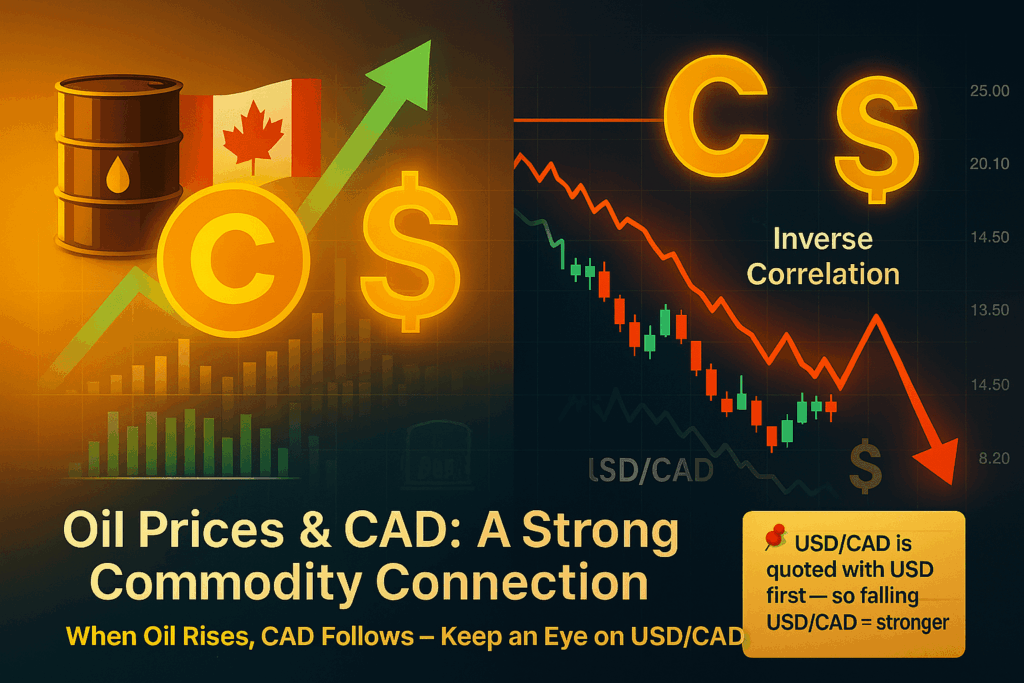
Canada exports a significant portion of its crude oil to the U.S. and other countries. So when oil prices rise, the Canadian dollar tends to strengthen, as it boosts national revenues, improves the trade balance, and attracts investment. This means:
- When oil prices go up, USD/CAD usually falls (CAD strengthens).
- When oil prices drop, USD/CAD tends to rise (CAD weakens).
🧠 Remember: USD/CAD is quoted with the USD first. So a falling USD/CAD means the CAD is gaining strength against the dollar.
📈 You can follow real-time oil price charts on platforms like OilPrice.com to monitor potential CAD reactions.
Canada exports a significant portion of its crude oil to the U.S. and other countries. So when oil prices rise, the Canadian dollar tends to strengthen, as it boosts national revenues, improves the trade balance, and attracts investment. This means:
- When oil prices go up, USD/CAD usually falls (CAD strengthens).
- When oil prices drop, USD/CAD tends to rise (CAD weakens).
🧠 Remember: USD/CAD is quoted with the USD first. So a falling USD/CAD means the CAD is gaining strength against the dollar.
📈 You can follow real-time oil price charts on platforms like OilPrice.com to monitor potential CAD reactions.
2. When the Correlation Breaks (and Why)
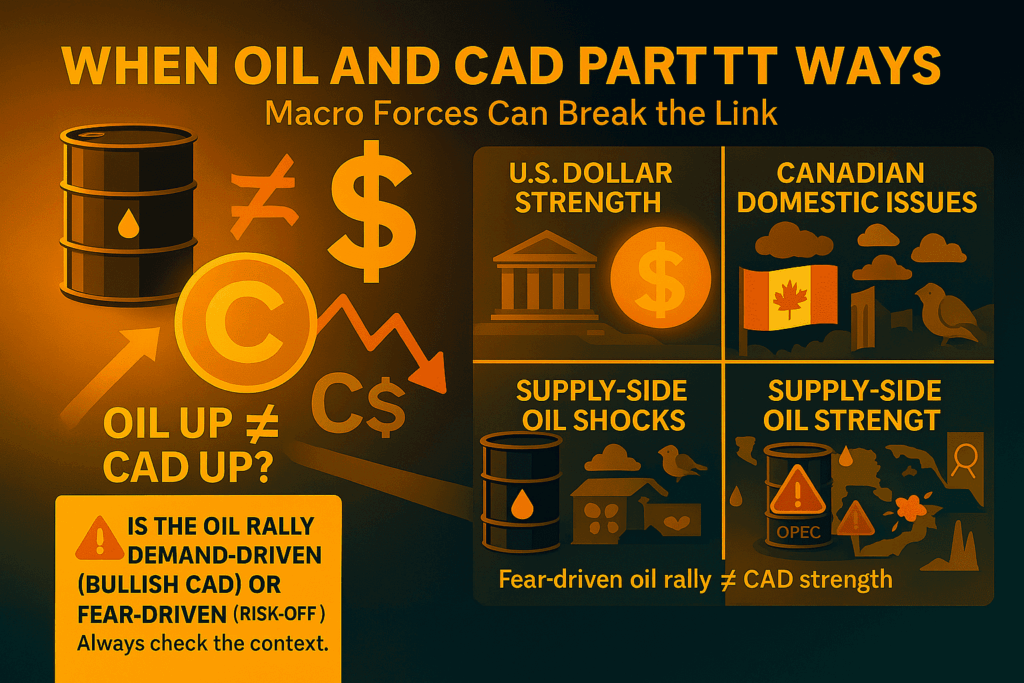
While the oil-CAD relationship is strong, it’s not perfect. There are times when the correlation weakens, usually due to:
- US Dollar Strength or Weakness: Broader moves in the USD due to interest rates or safe-haven flows can override oil-driven CAD reactions.
- Canadian Domestic Issues: Political turmoil, weak GDP, or dovish Bank of Canada policy can suppress CAD even when oil is rising.
- Supply-Side Shocks: Oil price increases driven by war or OPEC cuts may not always benefit CAD if the market sees them as inflationary or destabilizing.
⚠️ Pro Tip: Always look at oil price movements in context is the rally demand-driven (bullish CAD) or fear-driven (potential risk-off, mixed CAD effect)?
3. Key Technical Zones to Monitor (This Month)
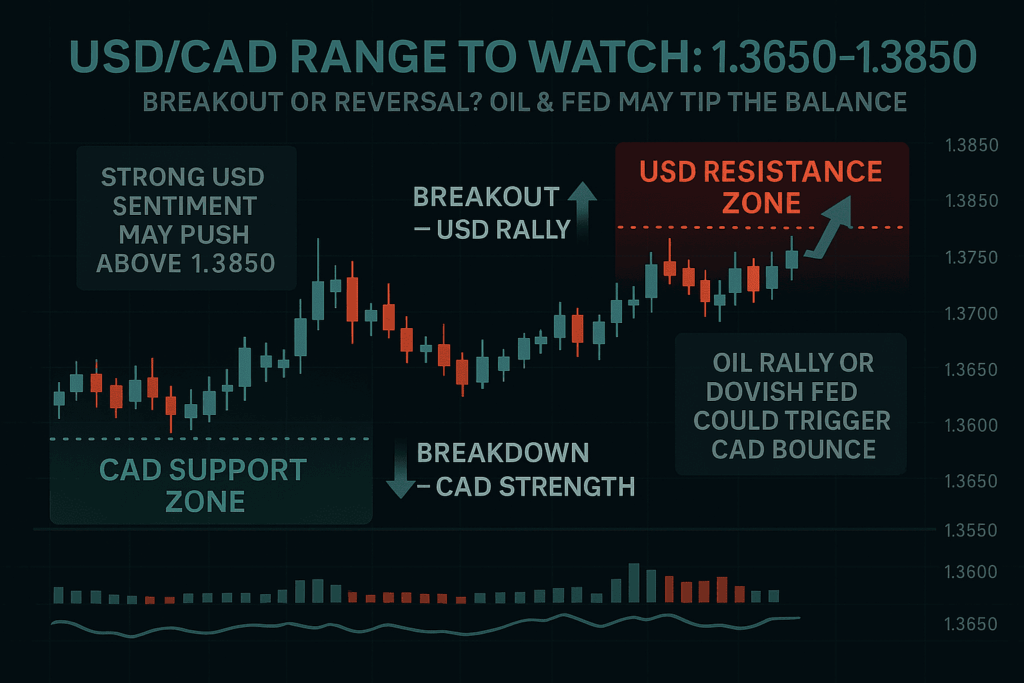
USD/CAD has recently been testing the 1.3700 – 1.3850 range. These levels act as short-term decision zones for traders.
- Resistance zone: Around 1.3850, which aligns with past swing highs and USD strength periods.
- Support zone: 1.3650–1.3700, where CAD tends to fight back on oil rallies or dovish Fed outlooks.
A break and close above resistance could signal a fresh USD rally, while a breakdown below support may indicate renewed CAD strength possibly backed by climbing oil prices.
4. Trading Strategy Ideas
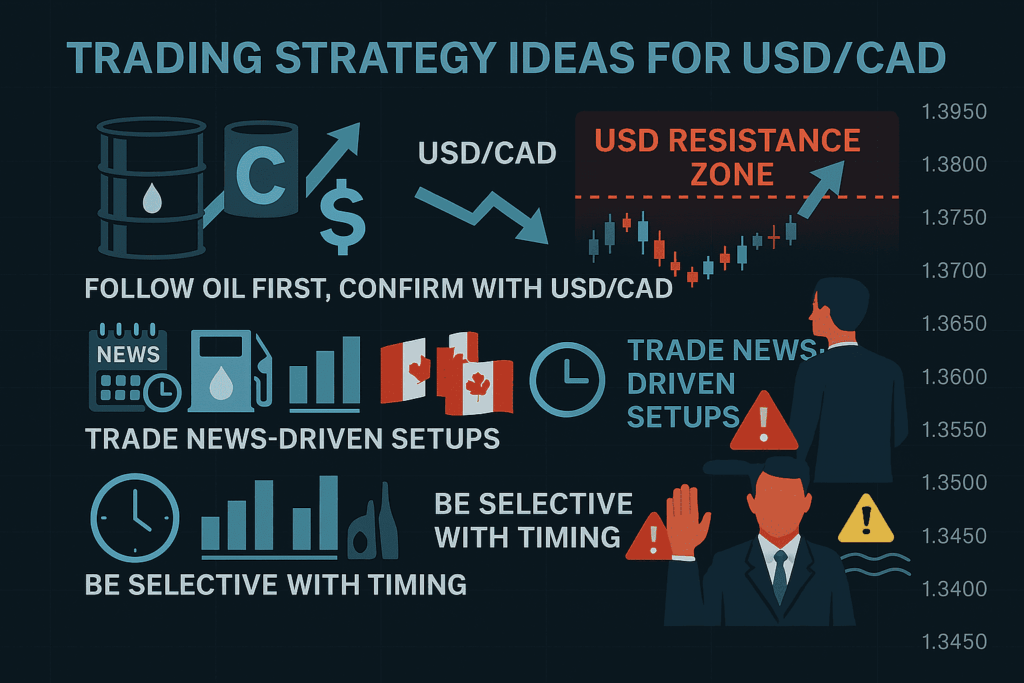
✅ 1. Follow Oil First, Confirm with USD/CAD
Use oil charts as a leading indicator. If oil breaks out to the upside, expect CAD strength to follow watch for short opportunities in USD/CAD.
✅ 2. Trade News-Driven Setups
Watch for simultaneous data releases:
- Crude Oil Inventories (usually on Wednesdays)
- Canadian employment or CPI data
- US NFP or inflation figures
These overlapping events can create clean directional trades in USD/CAD.
✅ 3. Be Selective with Timing
Correlation trades work best during trend confirmation or risk-on/off shifts. Avoid choppy, low-volume sessions where price action is disconnected from fundamentals.
Final Thoughts
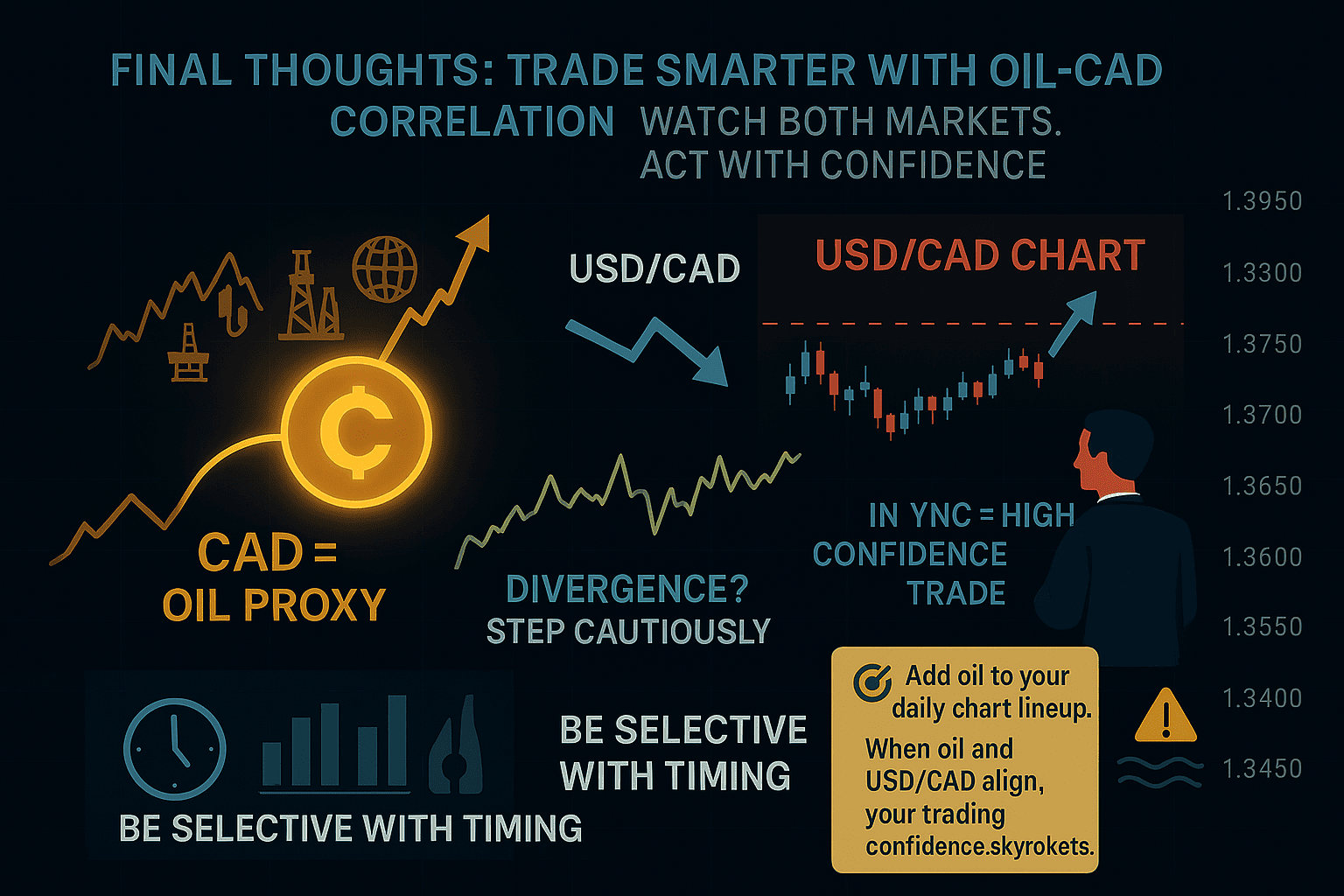
Understanding the USD/CAD and oil correlation is a powerful edge in the forex market if used correctly. Remember, the Canadian dollar isn’t just a currency; it’s an energy proxy. As oil prices react to geopolitics, supply constraints, or global demand, USD/CAD often moves in sync (or sharp divergence).
The trick is staying flexible, watching both sides of the equation, and knowing when to step in or step back.
🎯 Action Tip: Add oil (WTI or Brent) to your daily chart lineup, alongside USD/CAD. When both align, your trading confidence increases dramatically.